SEO progress should be visible, practical, and easy to understand.
Small wins show the real work behind local SEO: stronger service pages, better local coverage, clearer calls to action, improved internal links, consistent Google Business Profile content, and website updates that move a business in the right direction.
Turn completed SEO work into clear business progress.
Small-win reporting explains what changed, why it matters, and which practical improvement should come next.
Local SEO is easier to trust when business owners can see what changed.
Not every useful improvement creates an instant ranking jump. A stronger page, a missing service added, a clearer customer path, or a consistent content system can still be meaningful progress. Small-win reporting turns that work into understandable updates without exaggerating results.
Practical improvements that strengthen the website one step at a time.
Small wins focus on work that improves service clarity, local relevance, website structure, customer trust, and the path from search to inquiry.
Better Service Coverage
Turn one broad services page into clearer individual pages for the specific services customers search for.
Stronger Local Signals
Add useful city, service-area, route, neighborhood, or nearby customer context where it supports the actual business.
Improved Page Clarity
Rewrite vague introductions, headings, service descriptions, and calls to action so visitors understand the offer faster.
Smarter Internal Links
Connect the homepage, service pages, city pages, blog posts, fleet pages, and contact sections in a more useful structure.
Consistent GBP Activity
Prepare service-focused Google Business Profile posts that rotate topics instead of repeating the same generic caption.
Stronger Trust Content
Add FAQs, process details, service expectations, business facts, contact paths, and useful customer decision information.
Every update should explain what changed and why it matters.
A useful progress update does not simply say that SEO work was completed. It connects the completed task to service visibility, local relevance, customer understanding, website structure, or conversion clarity.
Clear updates help business owners understand the SEO process.
A simple tracker can organize completed work, active priorities, supporting evidence, and the next recommended task.
Useful ways to document local SEO and website progress.
The strongest proof shows the completed work directly through screenshots, before-and-after sections, page lists, content plans, audit notes, and live project examples.
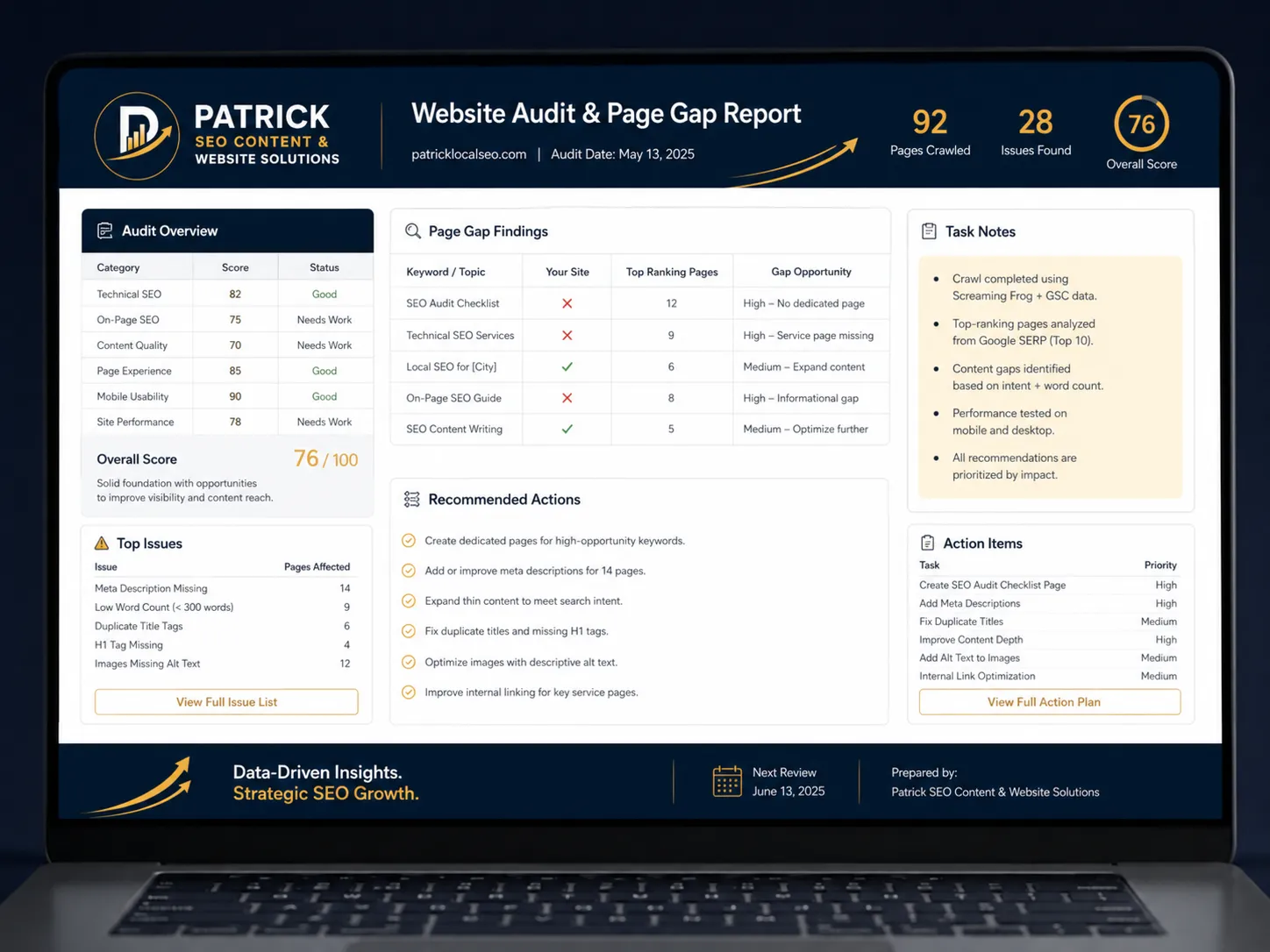
Page Gap & Priority Reports
Show which service, location, FAQ, trust, or support pages are missing and which improvements should be handled first.

Before-and-After Page Improvements
Compare previous page structure with updated headings, sections, trust content, navigation, calls to action, and mobile layout.
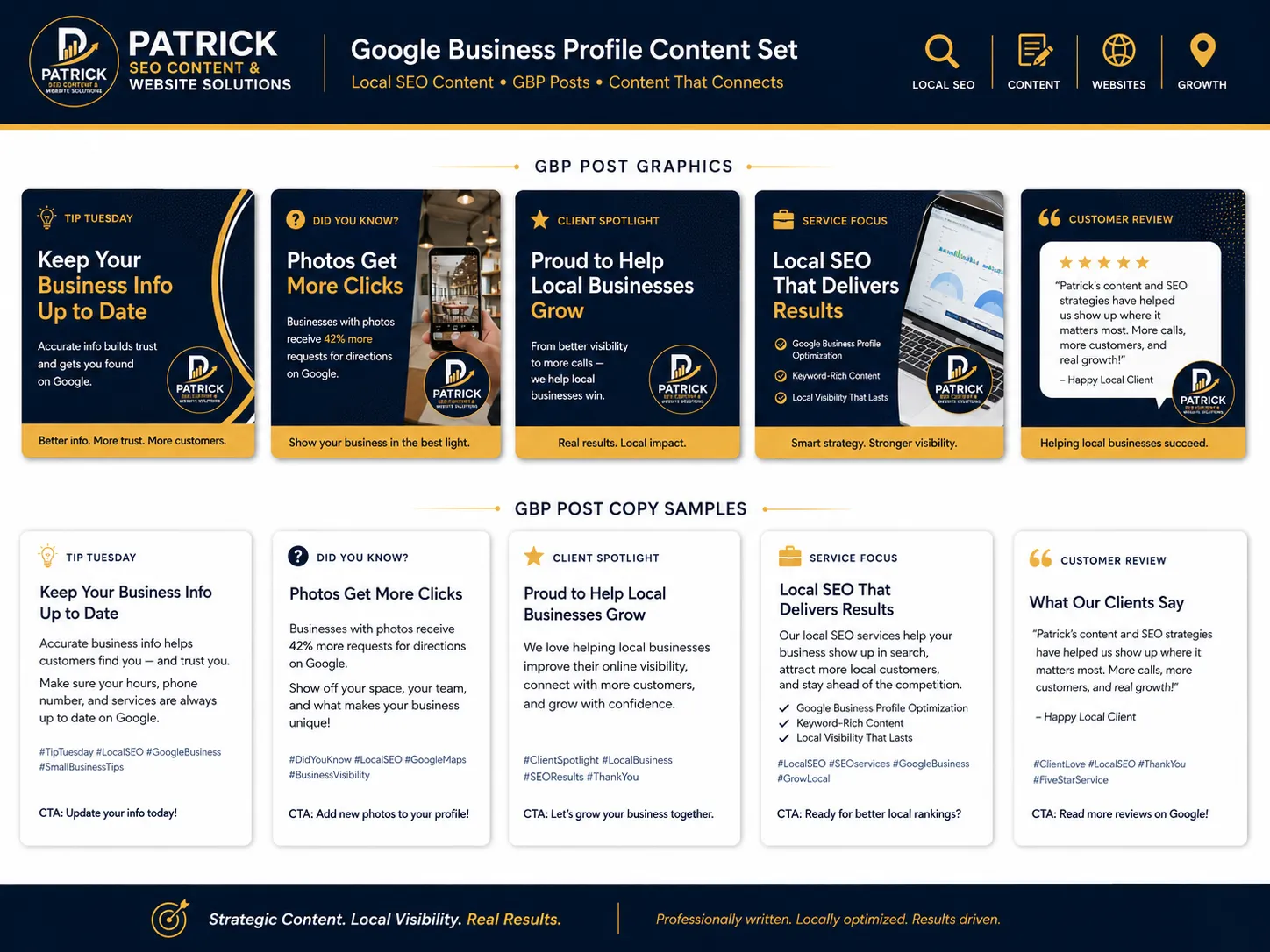
Google Business Profile Content Sets
Document completed GBP post batches, service-topic rotation, local captions, image preparation, and calls to action.
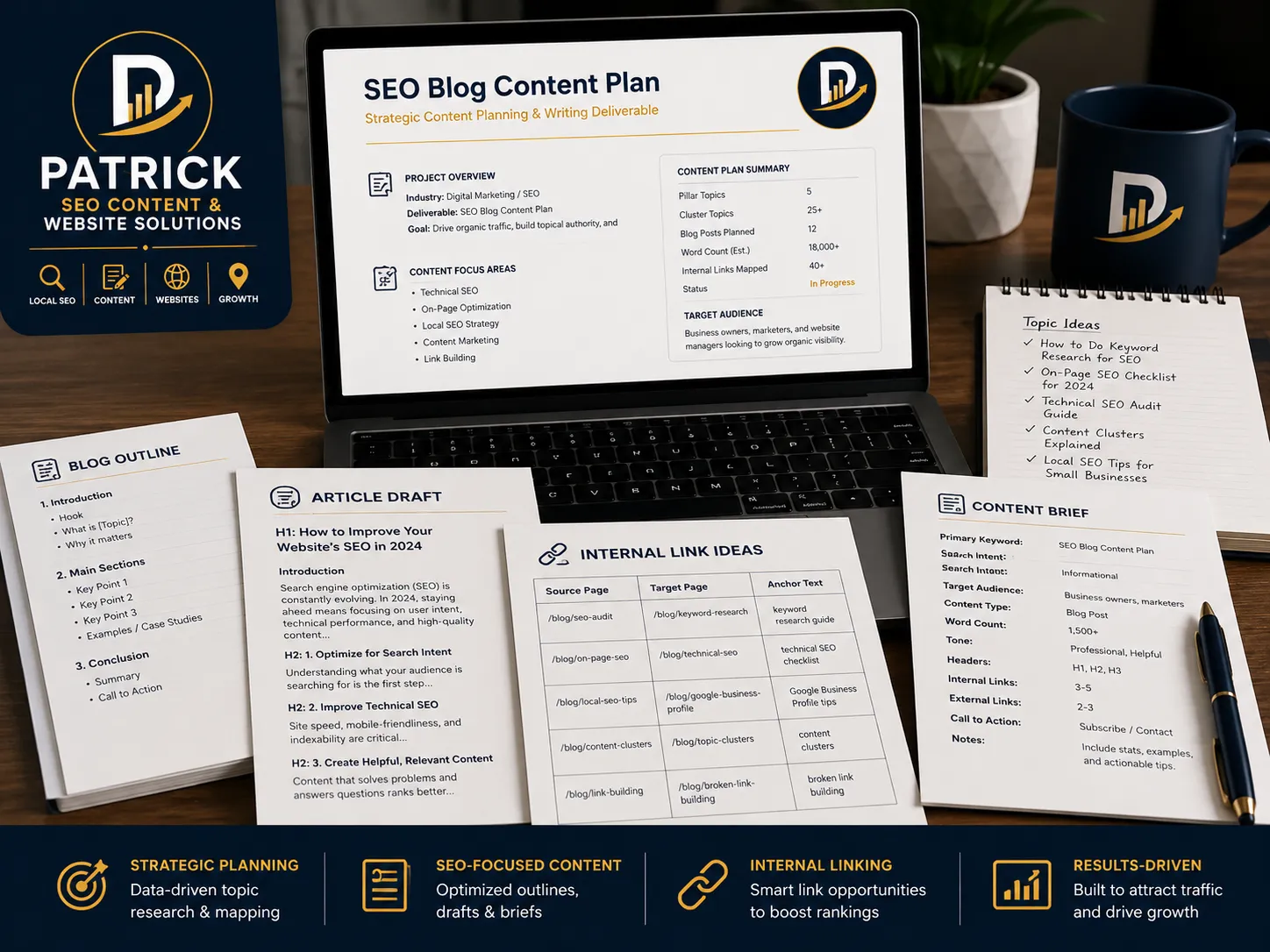
Content & Internal Linking Plans
Show how supporting blogs, FAQs, location content, and internal links connect with the service pages that matter most.
Show completed work and meaningful movement without overclaiming results.
Local SEO progress should be documented carefully. The report should distinguish between completed work, early movement, measurable outcomes, and future recommendations.
What a useful small-win update includes
Specific work, supporting evidence, business relevance, and a reasonable explanation of what the improvement supports.
- The exact page or profile updated
- What was added, fixed, or improved
- Why the change matters
- Screenshots, links, or completed deliverables
- The next recommended priority
What the report should avoid
Vague activity, unsupported ranking claims, guaranteed outcomes, or performance statements that cannot be verified.
- Claiming rankings without supporting data
- Presenting sample metrics as client results
- Guaranteeing traffic, leads, or revenue
- Listing tasks without explaining their value
- Using vanity numbers without business context
A simple process for turning completed SEO work into understandable progress.
Small-win reporting starts with completed work, documents the evidence, explains the practical value, and identifies what should be improved next.
Document
Record completed page, GBP, content, audit, internal link, or website updates.
Verify
Confirm the update is live, accurate, linked correctly, and visible on desktop and mobile.
Explain
Connect the completed task to service clarity, local relevance, trust, or customer action.
Prioritize
Identify the next page, content gap, profile update, or structural improvement.
Questions about small SEO wins and progress reporting.
What is a small SEO win?
A small SEO win is a practical improvement that strengthens a website or profile, such as publishing a missing service page, improving a weak introduction, adding internal links, preparing GBP posts, or fixing an unclear conversion path.
Does every SEO improvement create an immediate ranking increase?
No. Some improvements strengthen page quality, structure, local relevance, trust, or customer clarity before larger performance changes become visible.
How should SEO progress be reported?
Progress should identify what was completed, show supporting evidence, explain why it matters, separate work from measured outcomes, and provide a clear next priority.
What proof can be included in a small-win report?
Useful proof can include live page links, screenshots, before-and-after sections, audit notes, page-gap lists, GBP content sets, internal link maps, and verified analytics or search data when available.
Can small wins help guide a larger SEO strategy?
Yes. Small wins reveal completed priorities, remaining content gaps, structural issues, and the next improvements that can build toward a stronger local SEO system.
Want a clearer list of small SEO wins for your website?
Send your website link and the main service or city you want to improve. You will receive practical direction on page gaps, weak content, internal links, customer paths, and the improvements worth prioritizing first.