
Limo SEO built around real booking intent.
Patrick SEO Content & Website Solutions helps limousine, black-car, airport transportation, and private chauffeur companies build clearer websites around the searches that can lead to real inquiries. The strategy connects airport routes, fleet details, local service coverage, trip-specific pages, Google Business Profile content, and stronger quote paths.
Connect the trip, route, vehicle, location, and booking path.
Limo customers search differently depending on the airport, city, passenger count, vehicle, occasion, and type of transportation they need.
Limo SEO is not just a homepage, a city name, and a list of vehicles.
A transportation website may serve airport travelers, executives, wedding parties, convention groups, tourists, and local residents. Each customer has different questions about routes, timing, luggage, capacity, pickup procedures, service areas, and vehicle suitability. The website needs enough structure to answer those questions without creating repetitive or disconnected pages.
Customers often search by trip type, route, vehicle, airport, and city.
A useful limo SEO plan maps those different search patterns into pages that are specific enough to help customers but organized enough to avoid a confusing website.
Route-Based Searches
Airport transportation searches may combine a pickup city, destination airport, vehicle preference, group size, or transfer direction. Route pages need useful trip information—not only two place names.
Occasion-Based Searches
Corporate travel, weddings, concerts, conventions, wine tours, cruise transfers, and special events require different service explanations, planning details, and calls to action.
Vehicle-Fit Questions
Customers need to know whether a sedan, SUV, Sprinter van, or another genuine fleet vehicle can handle the passengers, luggage, pickup conditions, and trip type.
Build the pages and content systems that support transportation bookings.
The exact scope depends on the current website. Some companies need a page-gap audit first. Others need stronger route content, better service pages, more useful fleet details, improved internal links, or a consistent Google Business Profile content plan.
Limo Website SEO Audit
Review the current website for missing pages, weak service coverage, unclear headings, thin fleet information, internal-link gaps, and booking-path problems.
- Service and route page gaps
- Local coverage review
- Fleet content quality
- Priority action plan
Airport & Route Pages
Create useful transportation pages around actual airport service, pickup areas, travel directions, reservation needs, and route-specific customer questions.
- Airport transfer pages
- City-to-airport route pages
- Meet-and-greet or curbside details
- Flight and luggage guidance
Core Limo Service Pages
Improve or create pages for the services customers actually book instead of placing every offering inside one broad transportation page.
- Corporate and executive travel
- Wedding and event transportation
- Hourly and point-to-point service
- Group and shuttle transportation
Fleet & Capacity Content
Help customers compare vehicles using accurate passenger limits, luggage expectations, interior or exterior details, and the trips each vehicle is best suited for.
- Sedan, SUV, and Sprinter pages
- Passenger and luggage guidance
- Business and group use cases
- Vehicle-specific quote paths
City & Service-Area Pages
Build locally useful pages for genuine service areas without publishing dozens of pages that only replace the city name.
- Distinct city service information
- Nearby airports and destinations
- Local trip scenarios
- Related service and route links
GBP Content & Internal Links
Support the website with service-focused Google Business Profile posts and a cleaner link structure between money pages, routes, cities, fleet pages, and contact paths.
- Service and route post topics
- Seasonal transportation content
- Blog-to-service links
- Clear quote-request pathways
Start with the pages closest to a transportation inquiry.
A limo company usually gains more practical value from stronger airport, service, fleet, and city pages than from publishing unrelated blog posts every week. Support content should answer real customer questions and connect back to the pages where a booking decision happens.
A clean site structure connects booking intent instead of scattering it.
The page map should reflect what the company actually offers, where it operates, and what information customers need before requesting a quote.
Content can be organized around the trips customers are trying to plan.
The page strategy should reflect the actual services offered by the company. These are common examples—not a requirement to claim services or vehicles that the business does not provide.
Airport Transportation
Airport pages can explain pickup procedures, flight tracking, waiting expectations, luggage, vehicle selection, service areas, and one-way or round-trip reservations.
Corporate & Executive Travel
Business pages can address punctuality, professional chauffeurs, account needs, invoicing, meetings, roadshows, conventions, and multi-stop schedules.
Weddings & Special Events
Event content can explain timing, vehicle coordination, multiple pickups, venue transportation, group movement, and reservation lead time.
Group & Sprinter Transportation
Group pages should make passenger capacity, luggage, vehicle configuration, shuttle needs, and itinerary details easier to understand.
Wine Tours & Leisure Trips
Tour pages can cover hourly service, itinerary planning, multiple stops, group size, pickup location, and the difference between transportation and tour planning.
Hourly & Point-to-Point Service
These pages can help customers choose between a direct transfer and reserved hourly transportation based on stops, waiting time, schedule flexibility, and trip purpose.
Examples of local transportation website work.
These examples show experience with limo website structure, service coverage, local content, trust sections, and inquiry-focused page flow. They are presented as work examples—not unsupported claims about rankings, traffic, leads, or revenue.
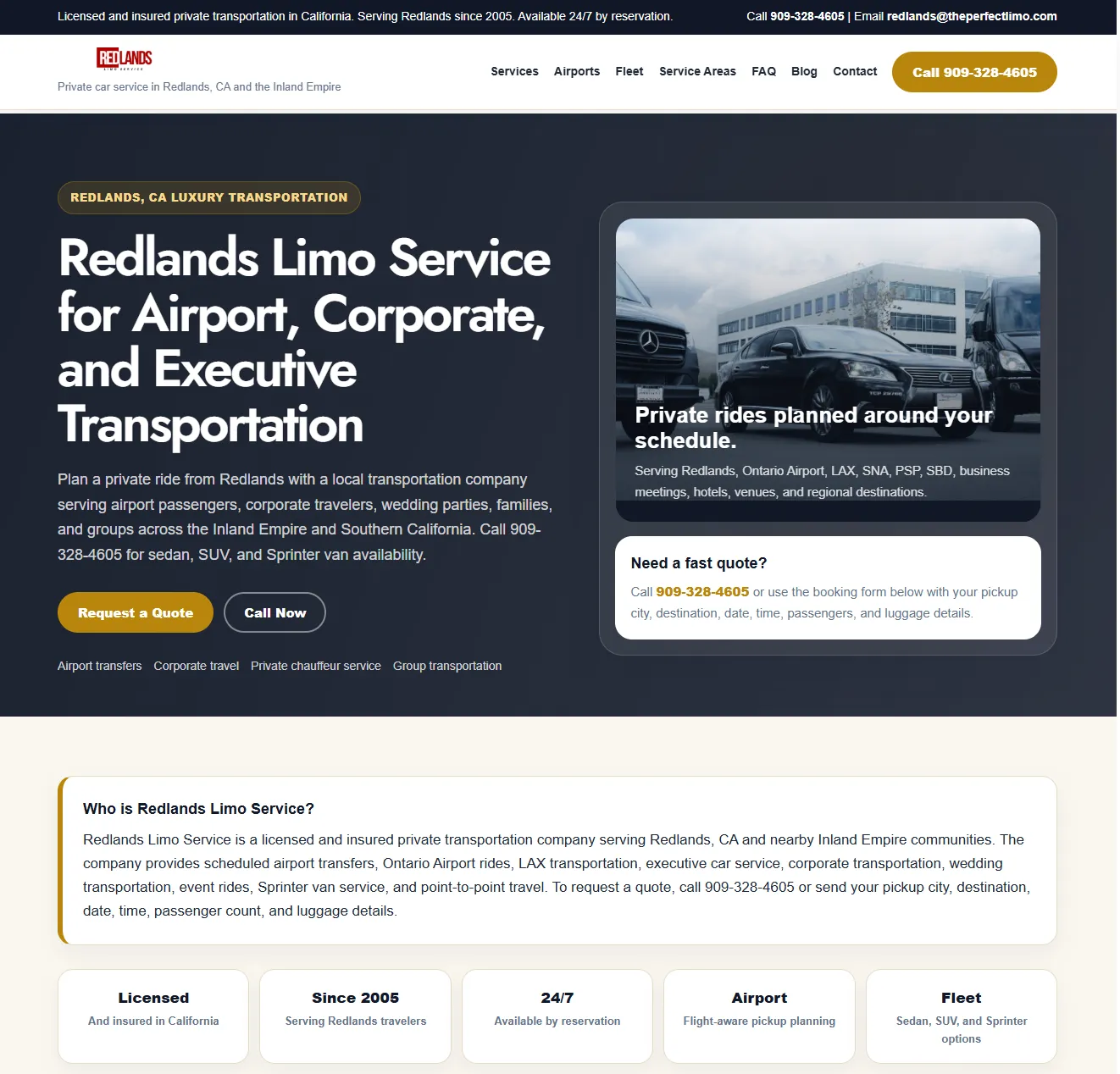
Redlands Limo Service
Website structure, service-page planning, local trust content, and conversion-focused sections for a local transportation business.
- Homepage and service hierarchy
- Airport and transportation pages
- Fleet, city, and contact pathways
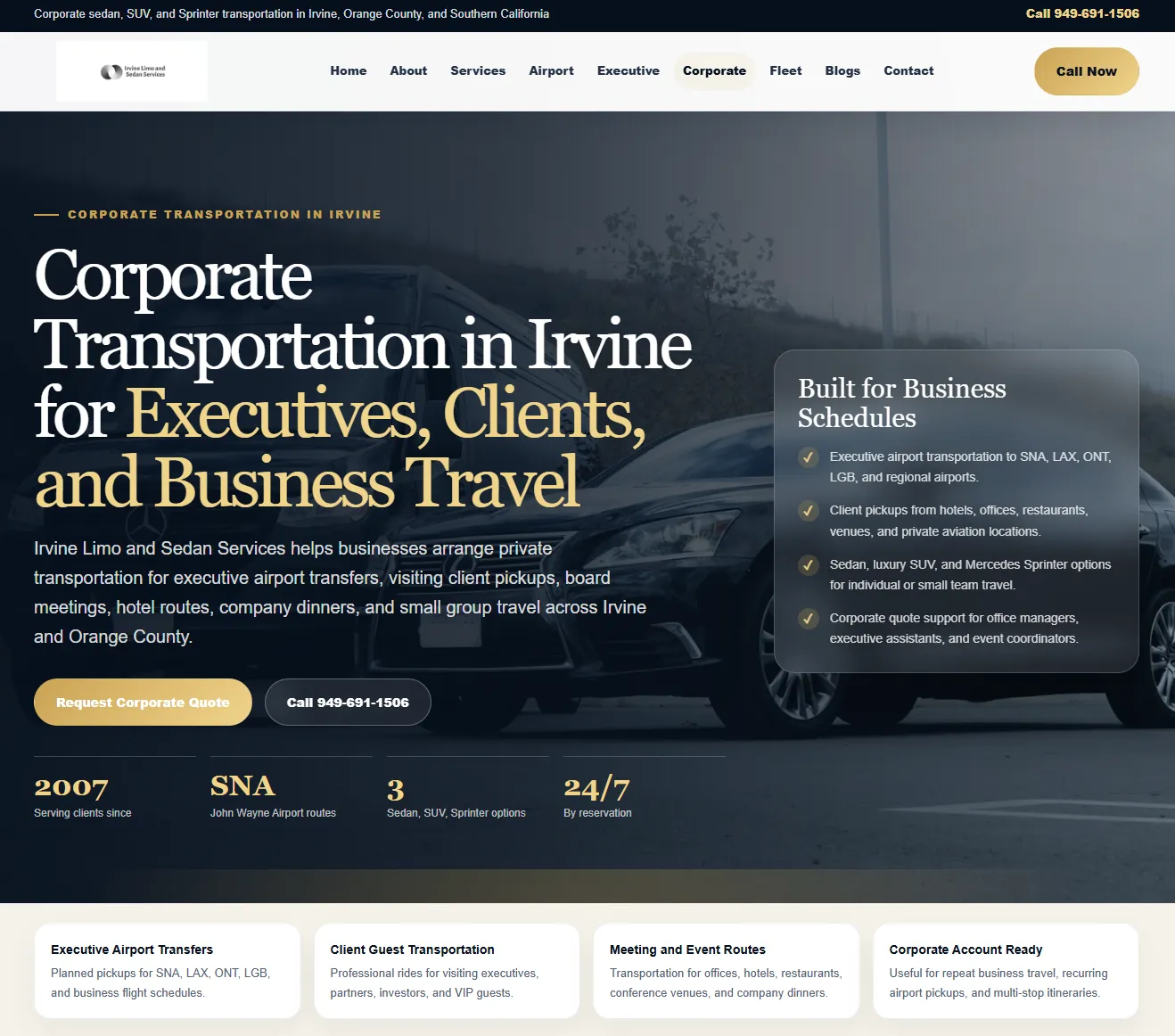
Irvine Limo and Sedan Services
Local service website work focused on service coverage, SEO content structure, trust sections, local relevance, and customer inquiry paths.
- Service and fleet content
- Airport and local transportation structure
- Quote-focused calls to action
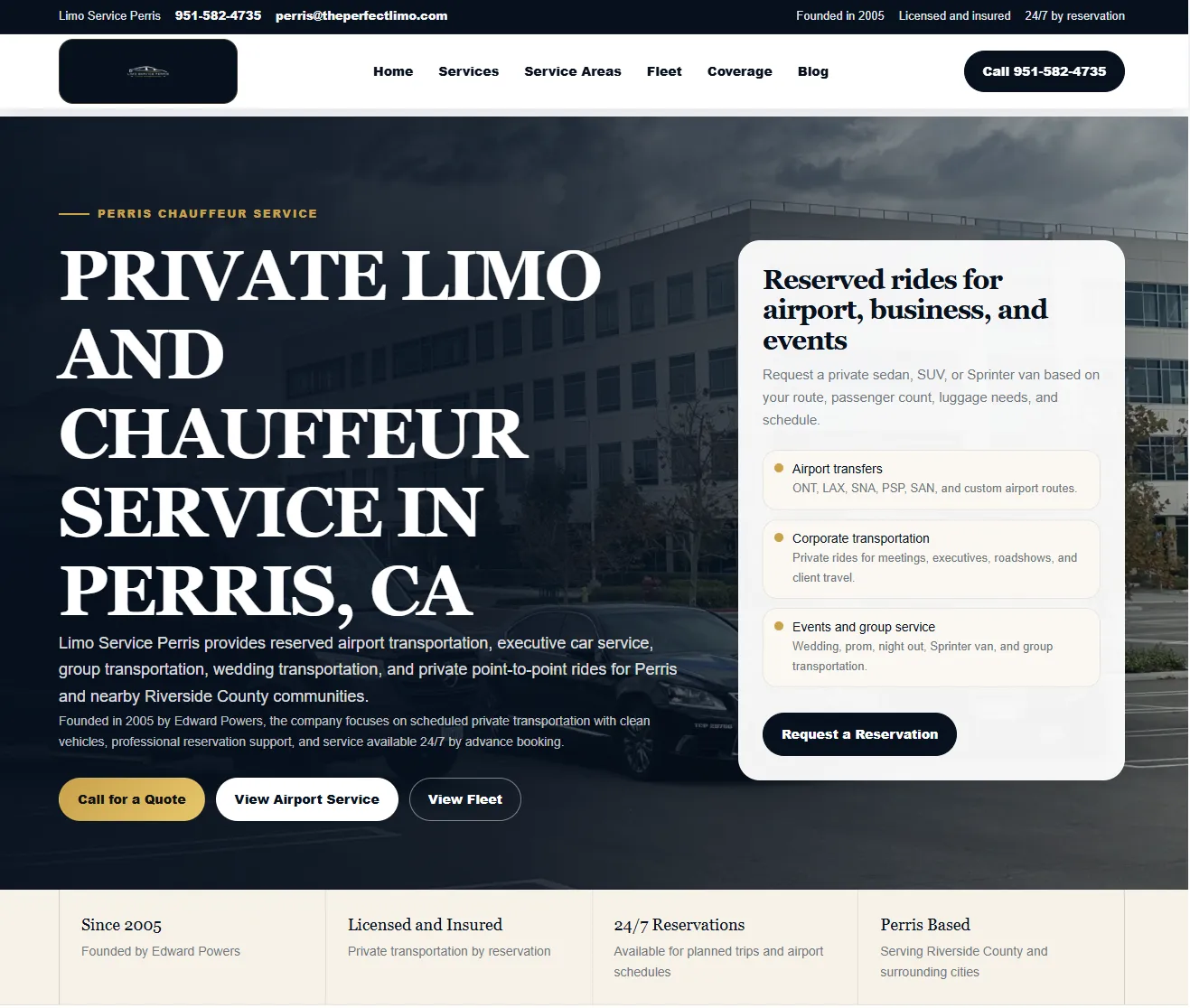
Limo Service Perris
Website content and layout support including service-focused sections, local transportation pages, trust content, and inquiry pathways.
- Local service pages
- Transportation content structure
- Customer action sections
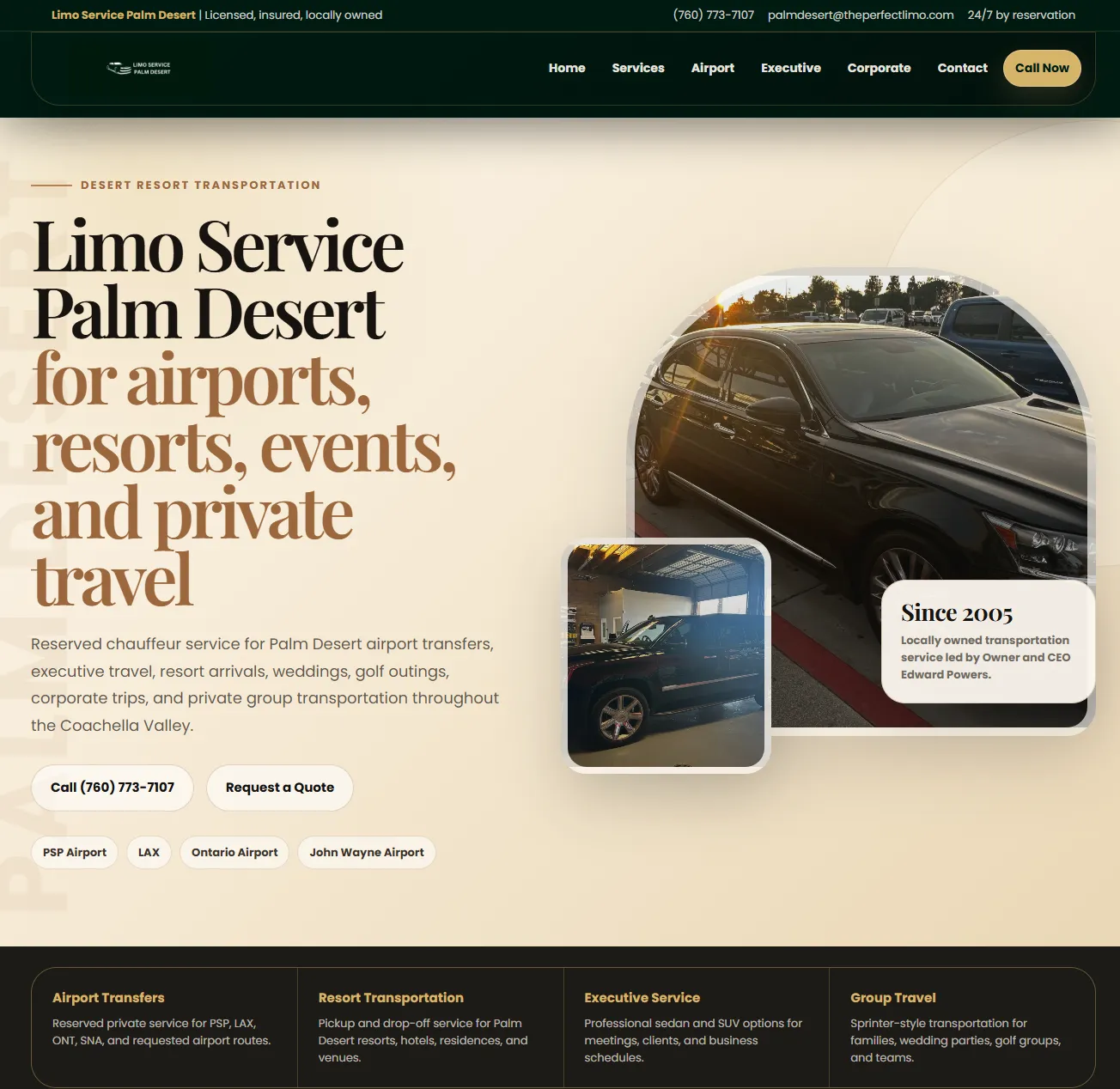
Limo Service Palm Desert
A transportation website project showing page hierarchy, service relevance, local content sections, visual branding, and inquiry-focused flow.
- Local search intent
- Website and page hierarchy
- Service and inquiry flow
Clear deliverables connected to the current state of the limo website.
The work can begin with an audit, a focused content project, or a custom proposal. The scope should identify what will be reviewed, written, improved, linked, or implemented.
Recommended service, airport, fleet, location, and support pages organized by priority.
New or refreshed page content with headings, trust details, FAQs, CTAs, and local relevance.
Connections between the homepage, services, airports, cities, fleet, blogs, and quote paths.
A practical order for what to fix, publish, improve, or test next without vague activity reporting.
A structured path from website gaps to stronger booking pages.
The process starts with the business facts, existing website, fleet, service areas, airports, trip types, and booking procedure. Recommendations should be based on the real operation rather than generic transportation content.
Review
Check the website, services, routes, fleet, local coverage, Google Business Profile, internal links, and quote path.
Map
Organize the priority service, airport, city, fleet, and support pages around real customer intent.
Create
Write or refresh the approved pages, headings, FAQs, trust content, metadata, calls to action, and internal links.
Improve
Review implementation, document completed work, identify remaining gaps, and plan the next practical priority.
Build stronger search and booking assets without promising guaranteed rankings.
The service focuses on controllable improvements: page coverage, content quality, local relevance, site structure, customer clarity, and conversion paths. Search visibility and bookings are influenced by many factors, including competition, market demand, reviews, authority, pricing, operations, and how consistently the business follows through.
The strategy becomes more accurate when the operational facts are clear.
Useful project inputs include the real business name, service areas, airports, fleet, capacities, luggage guidance, pickup process, waiting policy, corporate options, booking lead time, and the exact information required for a quote.
Questions about local SEO for limo companies.
What should a limo company optimize first?
The starting point depends on the existing website, but the homepage, core service pages, airport transportation pages, fleet information, service areas, internal links, and quote path usually deserve review before adding large amounts of blog content.
Do limo companies need separate airport pages?
Separate airport pages can be useful when the company genuinely serves those airports and can provide distinct information about pickup procedures, service areas, routes, flight tracking, luggage, vehicle selection, and reservation needs.
Should every city have its own limo service page?
No. City pages should be created selectively for real service areas and should contain useful, distinct local information. Publishing many nearly identical pages with only the city name changed creates a weak website experience.
How can fleet pages support local SEO?
Fleet pages help customers understand vehicle suitability, passenger capacity, luggage expectations, trip use cases, and booking choices. They also create natural internal-link opportunities from airport, corporate, wedding, and group transportation pages.
Can Google Business Profile posts help a limo company?
GBP posts can support consistent service communication by rotating airport routes, corporate travel, vehicle guidance, events, completed-trip proof, seasonal needs, and clear quote instructions. They should support the website rather than replace missing service pages.
What information is needed to write accurate limo content?
Useful inputs include the actual fleet, passenger and luggage limits, service areas, airports, pickup process, waiting time, reservation policies, corporate options, occasions served, quote requirements, and any approved licensing, insurance, or experience claims.
Can you improve an existing limo website?
Yes. Existing pages can be reviewed for missing sections, weak introductions, repetitive city content, unclear headings, thin fleet details, poor internal links, weak calls to action, and pages that no longer match the company’s real services.
Does local SEO guarantee more limo bookings?
No legitimate service can guarantee rankings or bookings. Local SEO can improve the website’s coverage, clarity, relevance, structure, trust content, and inquiry paths, but results also depend on competition, reviews, demand, authority, pricing, operations, and follow-through.
Want a clearer website plan for your limo or transportation company?
Send the current website, primary service area, airports served, fleet, and the services you want to prioritize. The review can identify page gaps, weak content, route opportunities, fleet-content needs, internal links, and the best starting point for a custom project.