Local SEO content for service businesses.
I create local SEO website content that connects real customer searches with focused service pages, useful location pages, clear answers, internal links, metadata, trust sections, and calls to action.
Build the money pages first. Support them with useful content.
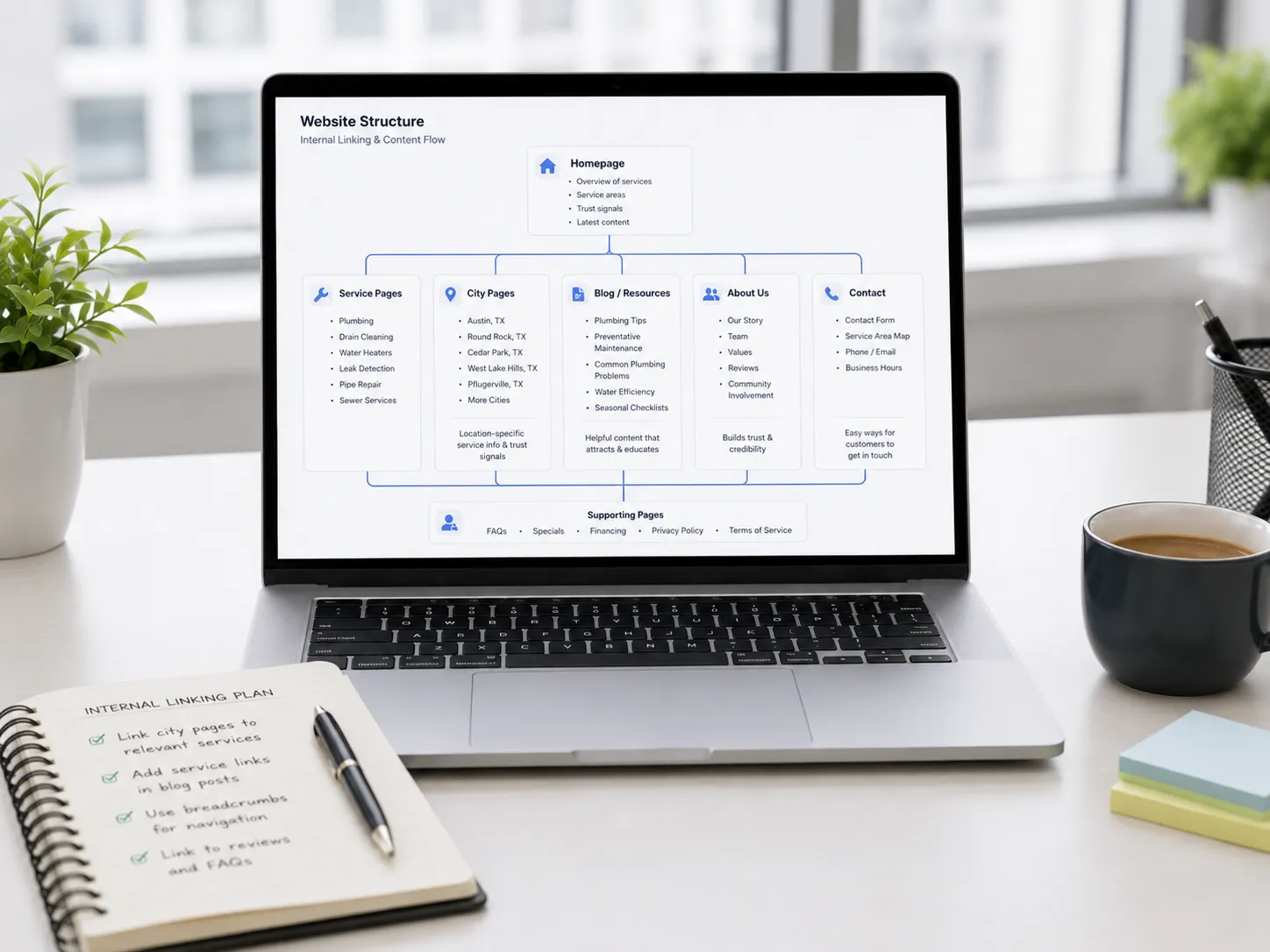
A clear site structure gives every page a purpose and helps customers move from search to service to inquiry.
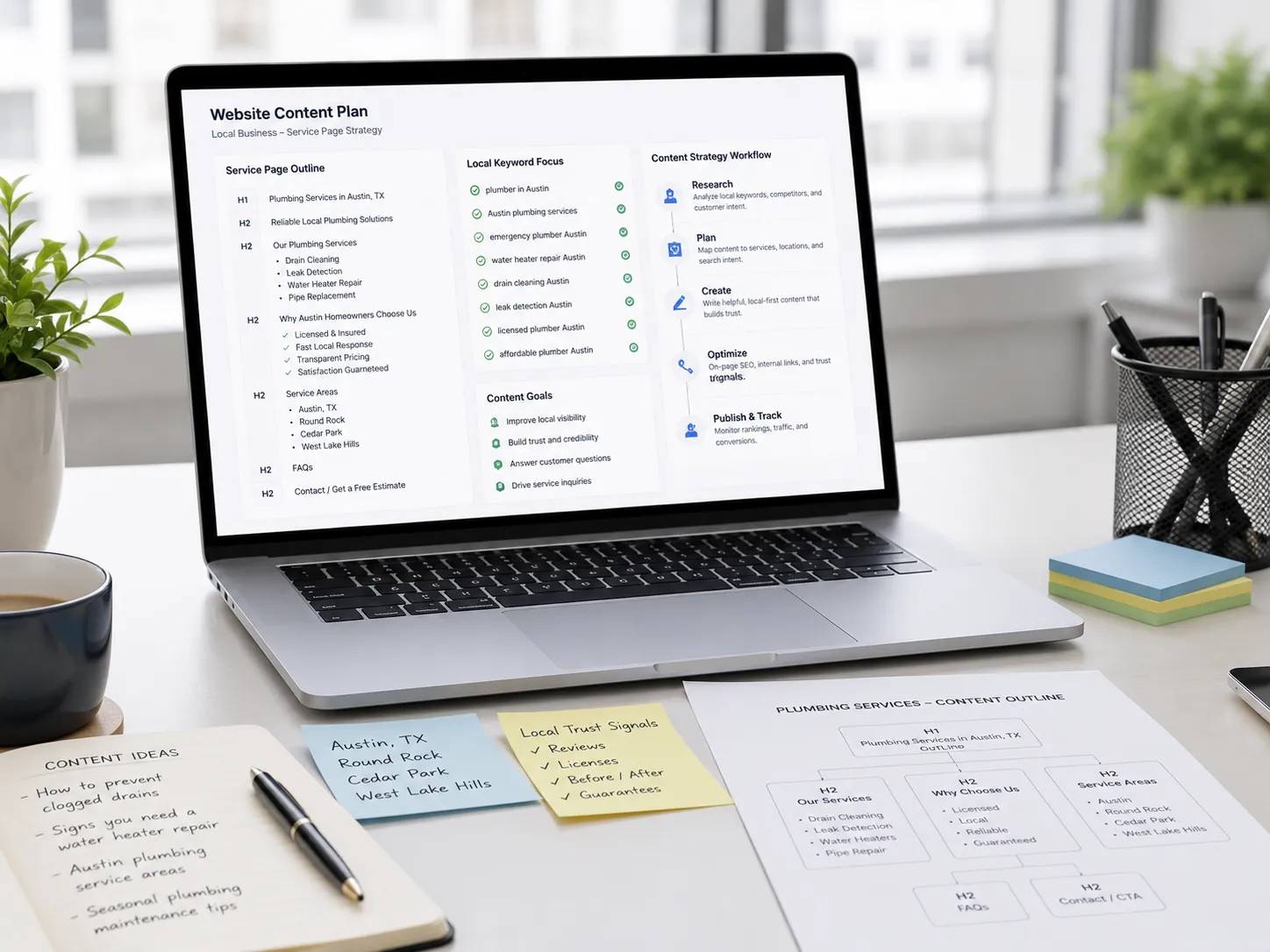
Local SEO content connects services, locations, customer questions, and clear next steps.
A local service website needs more than a short homepage and one broad services page. Stronger content usually begins with focused service pages, useful location content, practical FAQs, clear internal links, trust information, and answers that help customers make a decision.
What is included in a local SEO content service?
The scope can include service-page copy, location content, SEO metadata, internal linking, content refreshes, supporting FAQs, and buyer-intent topics based on the pages your business actually needs.
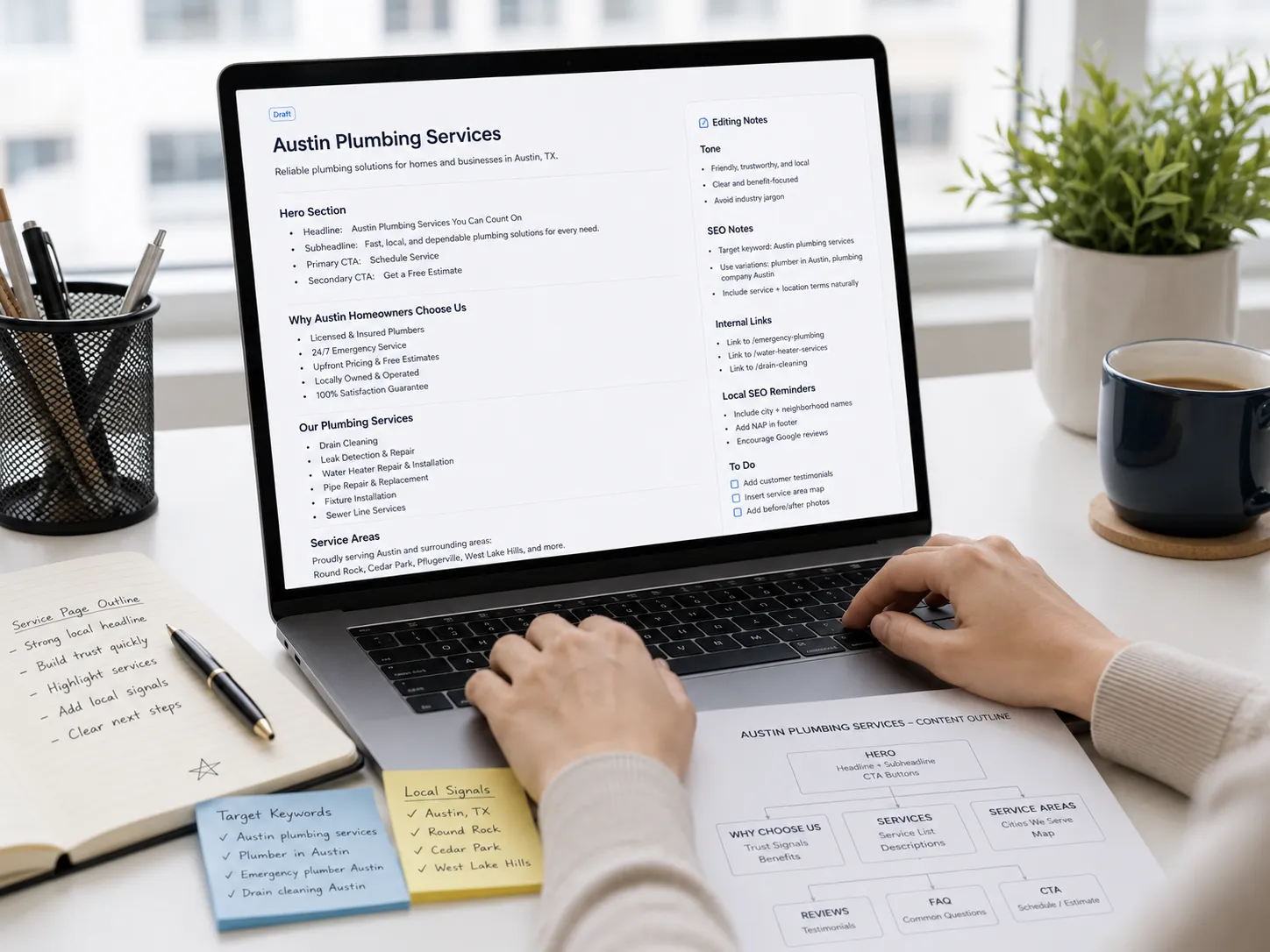
Service Page Copywriting
Clear service pages written around buyer intent, helpful explanations, local relevance, trust signals, FAQs, and calls to action.
- Core service page copy
- H1, H2, and section structure
- Customer-focused service details
- FAQ and CTA sections
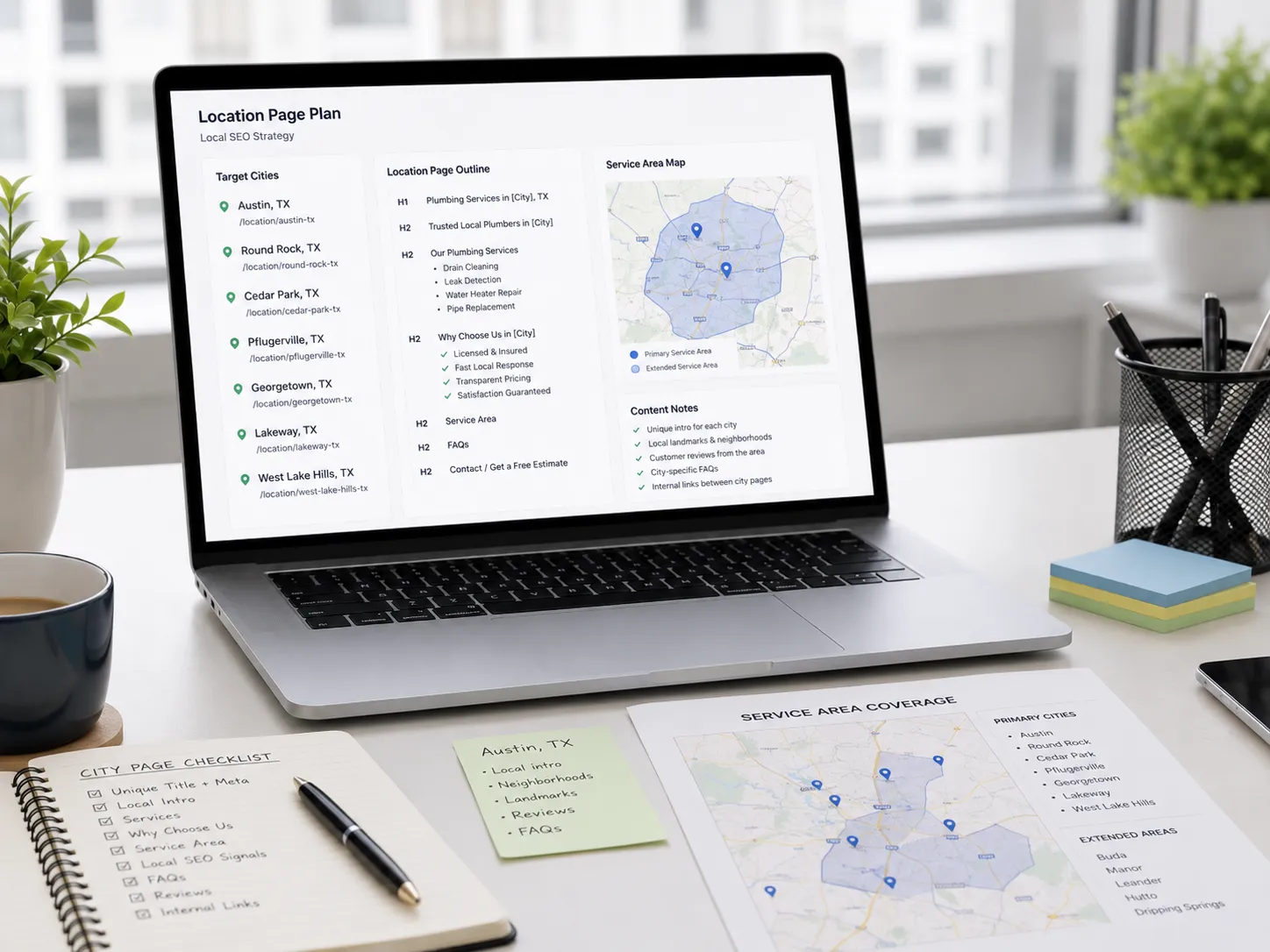
Location Page Content
City and service area pages that explain where the business serves, which services are available, and why local customers should inquire.
- City page copy
- Service area sections
- Local relevance details
- Internal links to services
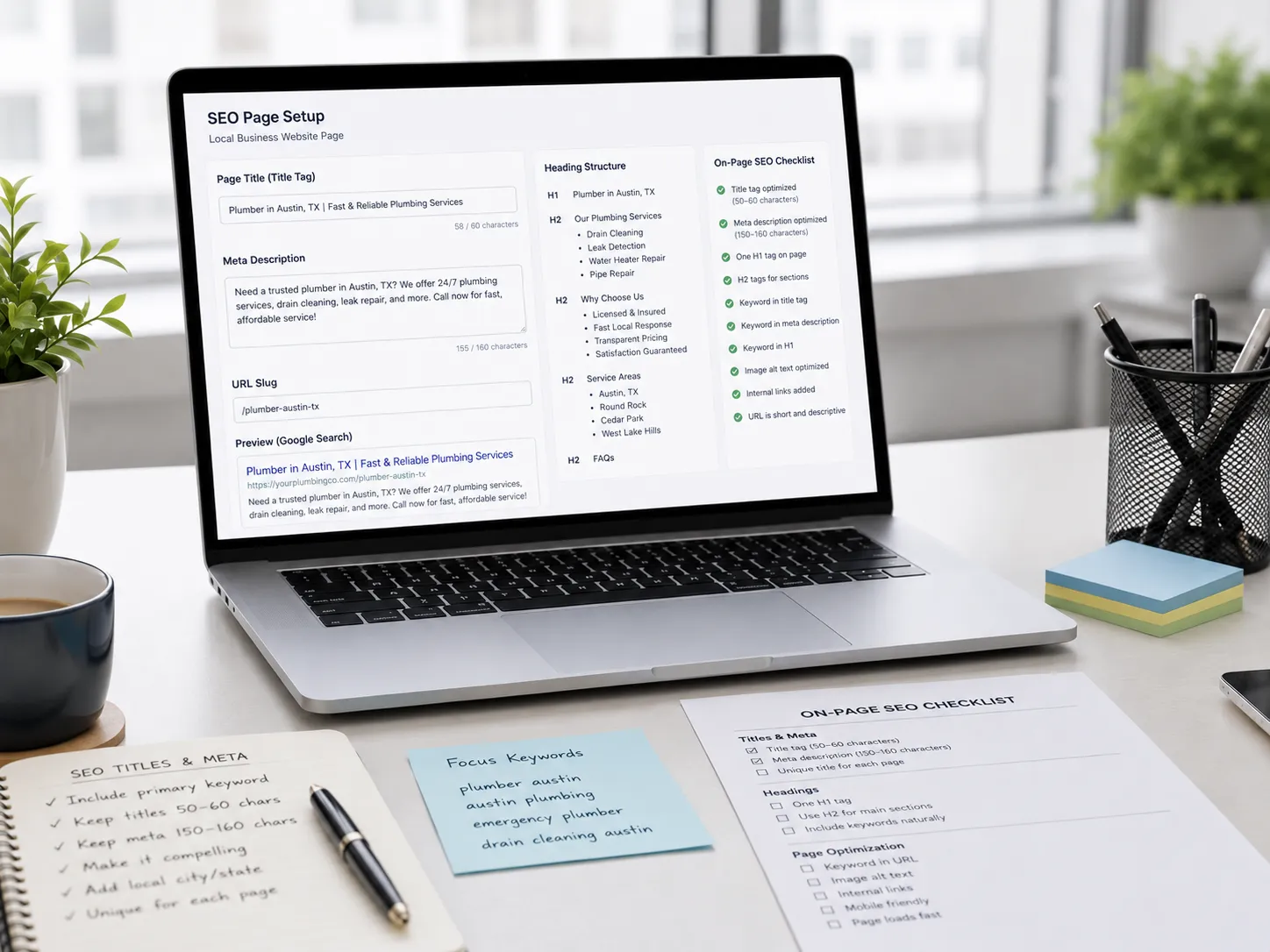
SEO Title & Meta Setup
Page titles, meta descriptions, headings, and content structure aligned with the main service, location, and search intent.
- SEO title suggestions
- Meta descriptions
- Heading structure
- Image alt text guidance
Website Content Structure
A cleaner page hierarchy so the homepage, services, locations, blog posts, and contact paths support one another.
- Page hierarchy planning
- Service-to-location links
- Blog-to-service links
- Clear customer paths
Buyer-Intent Blog Support
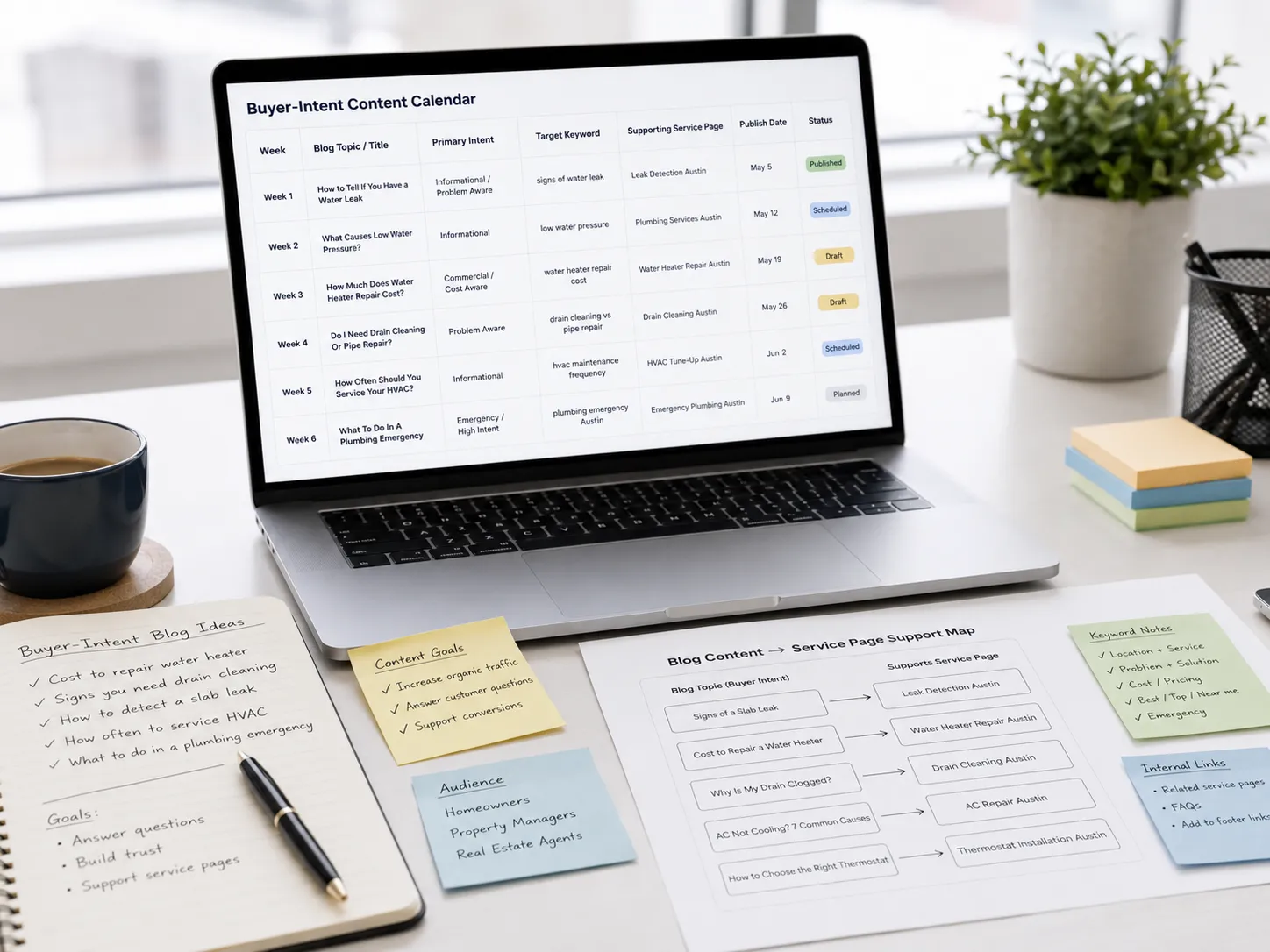
Supporting topics that answer cost, comparison, local, emergency, process, and decision-making questions.
- Bottom-of-funnel blog topics
- FAQ-style support content
- Service page support links
- Content calendar planning
Content Refresh Planning
Improve pages that are too thin, generic, outdated, unclear, or missing the details customers need before contacting you.
- Weak page refresh notes
- Stronger opening paragraphs
- Better trust and FAQ sections
- Clearer CTA placement
Strong local SEO starts with the pages that can generate real inquiries.
Blogs can help, but they should not replace clear service and location pages. The strongest content plan usually starts with the pages that explain what the business does, where it serves, who it helps, and why a customer should take the next step.
Give every page a clear role in the local customer journey.
Core pages capture service intent. Location pages strengthen local relevance. Supporting content answers questions and points customers back to the pages that generate inquiries.
Turn the page roadmap into a defined local SEO content project.
The content plan identifies which service pages, location pages, refreshes, metadata, FAQs, and internal links are needed. A custom local SEO proposal turns the selected priorities into a documented scope with deliverables, timing, responsibilities, exclusions, and a quotation.
The content service explains what can be created. The proposal defines the approved project.
A business can request one page, a multi-page content build, a refresh project, or a broader package that combines content with an audit, strategy, Google Business Profile support, and implementation.
Clear content deliverables, not random SEO copy.
Every deliverable should support visibility, customer understanding, or the next step toward an inquiry. The goal is to make the website more complete, useful, and conversion-ready.
Service pages, city pages, support pages, and refresh copy based on local search intent.
SEO titles, meta descriptions, slugs, headings, and image alt text recommendations.
Recommended links between the homepage, services, locations, blogs, and contact pages.
A practical list of pages and supporting topics that should be created or improved next.
Different pages support different customer searches and decisions.
A useful content plan maps each page to a clear service, location, customer question, or buying decision instead of publishing random pages that compete with one another.
Explain the problem, service process, customer fit, trust points, FAQs, service area, and next step.
Clarify where the business serves, which services are available, and how local customers can inquire.
Strengthen headings, introductions, service details, internal links, trust sections, FAQs, and CTAs.
Create useful support content that points customers toward the correct service or quote page.
Help visitors move through the website while clarifying relationships between important pages.
Use clear page-specific titles, descriptions, headings, slugs, and image alt text recommendations.
How the local SEO content process works.
The work starts by reviewing the current website, priority services, target locations, existing page coverage, customer intent, and the structure needed before new content is written.
Review
Check the current website, service pages, city coverage, headings, CTAs, and content gaps.
Plan
Decide which service pages, location pages, support topics, and internal links should come first.
Create
Write page copy, SEO metadata, headings, FAQs, trust sections, and calls to action.
Connect
Add internal links so the structure is easier for customers and search engines to follow.
Most local websites need stronger page coverage before more generic blog posts.
Local service websites often miss opportunities because important services, cities, questions, and decision points are not covered clearly on the site.
Questions about local SEO website content.
What is local SEO website content?
Local SEO website content includes service pages, location pages, supporting blogs, FAQs, SEO titles, meta descriptions, internal links, and page copy written to match local customer searches.
Should a local business start with blogs or service pages?
Most local businesses should start with strong service and location pages. Blogs work best when they support the pages that can generate leads.
Can existing website pages be improved?
Yes. Existing pages can be refreshed with stronger introductions, clearer headings, better service details, FAQs, trust content, internal links, and calls to action.
What businesses need this type of content?
Local service businesses such as limo companies, locksmiths, roofers, HVAC companies, plumbers, restoration companies, cleaners, contractors, and similar businesses can benefit.
Does this include SEO titles and meta descriptions?
Yes. The service can include SEO title suggestions, meta descriptions, heading structure, slug recommendations, internal links, and image alt text guidance.
What is included in a local SEO content package?
The agreed scope may include service pages, location pages, content refreshes, SEO metadata, FAQs, internal-link recommendations, trust sections, and buyer-intent supporting topics.
Can I request a local SEO proposal for multiple content pages?
Yes. A custom proposal can define the number and type of pages, required research, metadata, FAQs, internal links, publishing support, timeline, responsibilities, revisions, and quotation.
Can you write content for multiple services or cities?
Yes. The pages should be planned carefully so each service and location has a distinct purpose, useful information, and natural internal links without repeating the same copy across the site.
Do you publish the content on the website?
Publishing can be included when agreed in the project scope and suitable website access is provided. Content-only projects can also be delivered for the business or its developer to publish.
Does local SEO content guarantee higher rankings?
No. Strong content can improve page relevance and usefulness, but rankings also depend on competition, website quality, authority, technical SEO, reviews, and other local search factors.
Need stronger local SEO content and a clearly defined project scope?
Send your website, priority services, target city or service area, and the pages you are considering. Start with a content request, or review the proposal service when you need defined deliverables, timing, responsibilities, and a custom quotation.