City and service-area pages built around real local value—not city-name replacement.
Patrick SEO Content & Website Solutions plans, writes, and refreshes location pages for service businesses. Each page can combine genuine service coverage, local customer context, nearby areas, relevant services, project or trip examples, trust content, internal links, FAQs, metadata, and a clear quote, booking, or estimate path.
Explain what the business provides in the area and why the page deserves to exist.
A useful location page connects a real service area to customer needs, relevant services, local proof, nearby coverage, and a practical next step.
A city page should help a local customer—not merely create another URL.
A location page is most useful when the business genuinely serves the area and can provide distinct information about services, routes, project needs, customer questions, nearby coverage, local proof, and the correct inquiry process. Repeating the same page across dozens of cities creates a weak website experience and makes the content difficult to trust.
Many city pages are created for keywords before they are created for customers.
The content review checks whether the page has a distinct purpose, enough local usefulness, accurate business information, supporting proof, and a strong connection to the wider website.
City-Name Replacement
The page repeats the same text used for every other location, with only the city, county, or neighborhood name changed.
Fake Office Implications
The page may make the business appear to have a staffed location, storefront, or local office that does not actually exist.
No Service Differences
The page lists broad services but does not explain which services are available, common local use cases, or meaningful customer requirements.
No Local Proof
Reviews, completed work, trips, venues, property types, project examples, or customer scenarios connected to the area may be missing.
Weak Internal Links
The page may not connect to the relevant service pages, nearby areas, route pages, fleet or project pages, FAQs, or quote pathways.
Generic Contact CTA
The page may ask visitors to “contact us” without explaining what location, date, property, service, route, passenger, project, or urgency details to provide.
A complete city-page structure based on genuine coverage and local customer intent.
Not every page requires the same headings or length. The structure should reflect the business model, service type, available proof, local conditions, nearby areas, and the information customers need before requesting service.
Prioritize locations with real business value and enough unique information.
A page should not be created simply because a city is nearby. The strongest candidates are areas the business genuinely serves, understands, and can support with service detail, local context, proof, or a distinct route or customer need.
Not every geographic term needs the same kind of landing page.
The best page type depends on the business model and the customer’s reason for searching.
Local relevance should reflect how the business actually serves the area.
The useful details for a limo company are different from the useful details for a concrete contractor, pest-control provider, cleaner, or mobile professional.
Limo & Transportation
Pickup cities, airports, routes, destinations, venues, passenger capacity, luggage, trip type, scheduling, fleet options, and quote details.
View Limo SEO →Contractors & Home Services
Project types, property conditions, materials, estimates, inspections, service radius, seasonal issues, local proof, and completed work.
View Contractor SEO →Pest & Rodent Control
Pest types, local warning signs, property risks, inspection, treatment, recurring service, urgency, preparation, and genuine coverage.
Cleaning & Restoration
Property type, affected area, emergency response, access, equipment, service process, photos, estimates, and local travel limitations.
Mobile & On-Site Services
Appointment locations, travel areas, equipment, customer preparation, scheduling, parking or access, duration, and cancellation rules.
Professional Services
Client types, consultation availability, industries served, regional regulations, required documents, appointment method, and engagement steps.
Examples of local service, city, route, and coverage content.
These examples demonstrate city-page planning, airport and route content, local service coverage, internal linking, trust sections, and inquiry pathways. They are not presented as unsupported ranking, traffic, lead, or revenue claims.
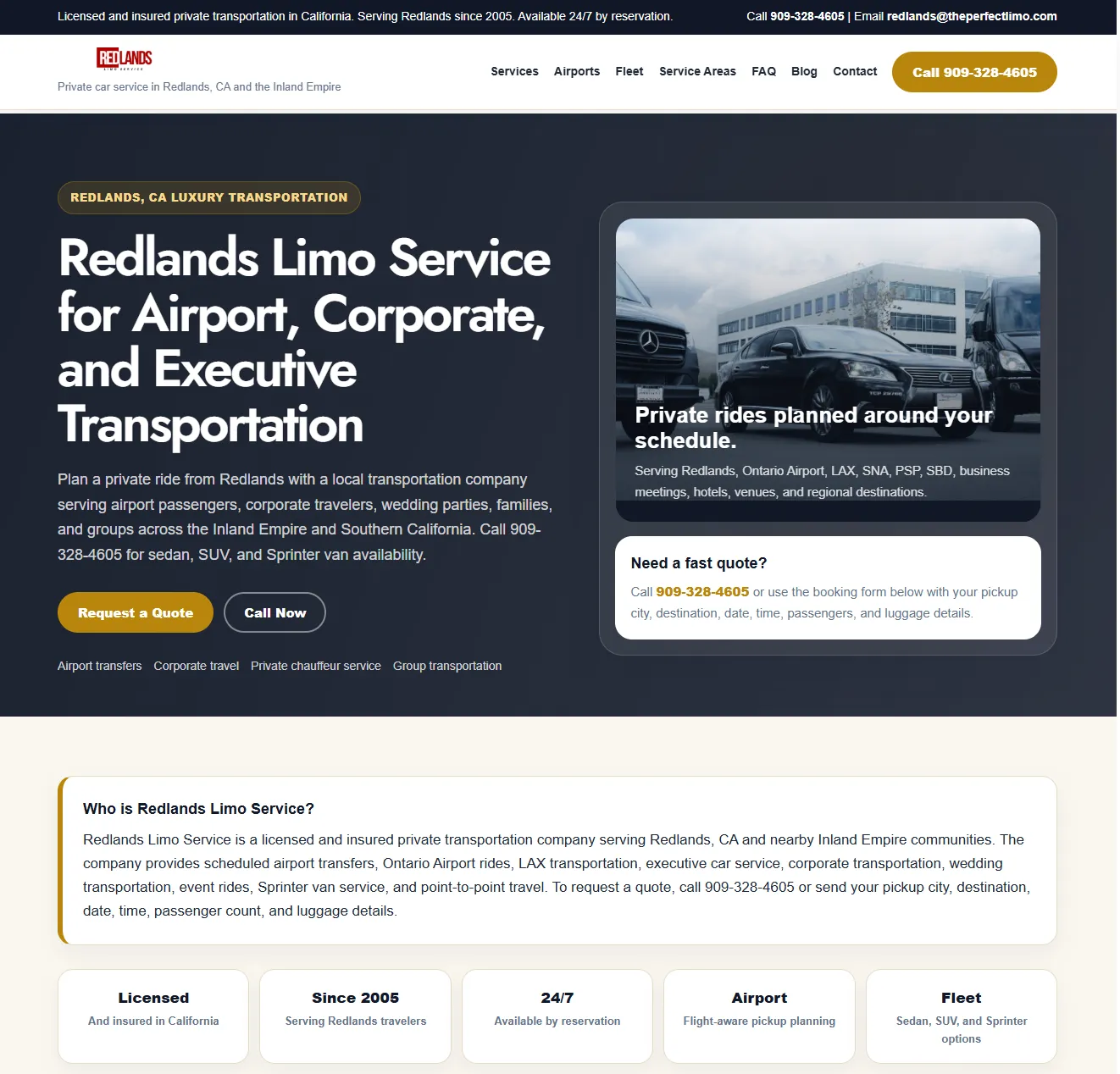
Redlands Limo Service
City, airport, service, fleet, and regional transportation pages connected through a structured local website and quote-focused content system.
View Live Website →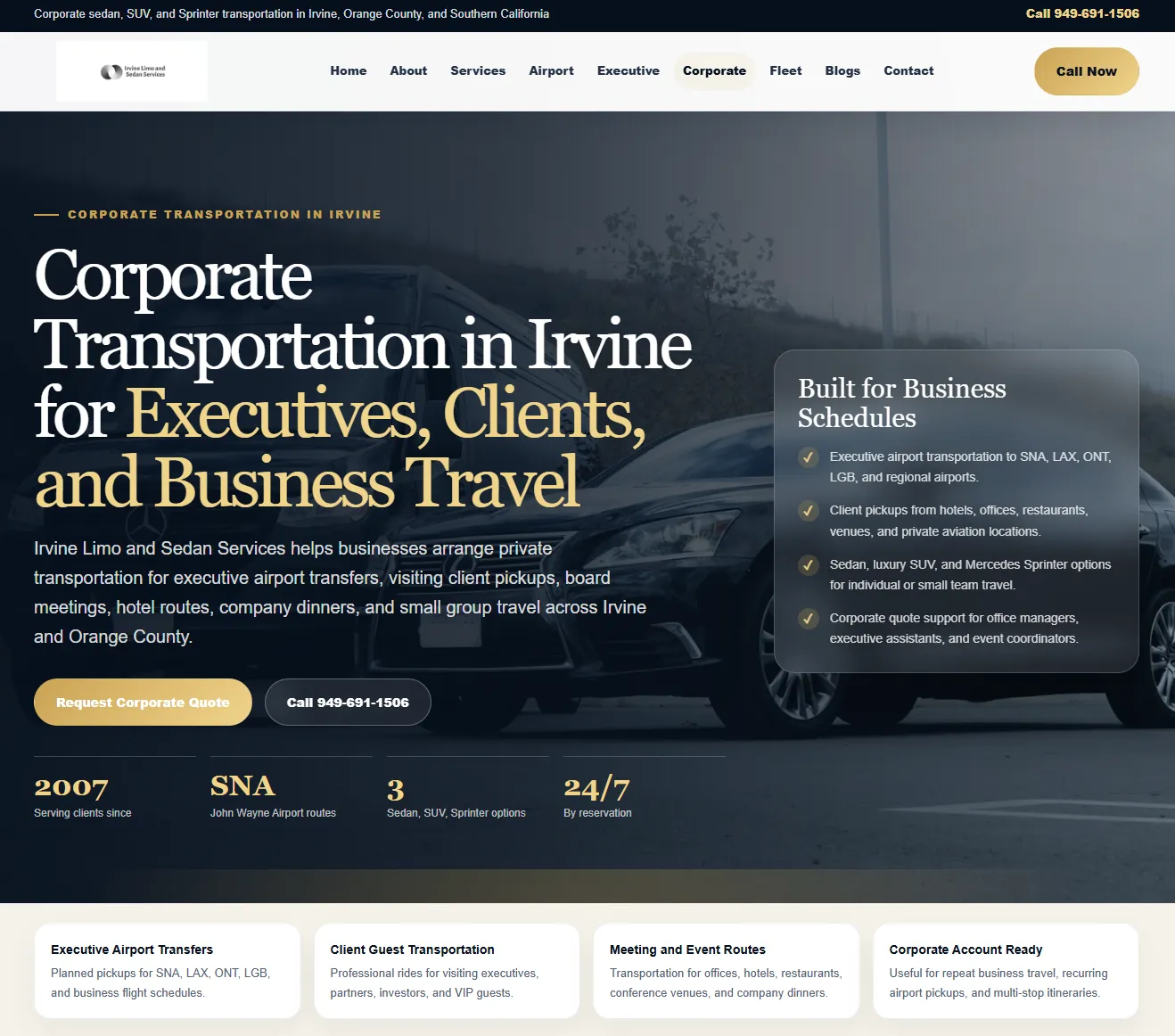
Irvine Limo and Sedan Services
Local transportation content organized around services, airport intent, city coverage, fleet choices, customer questions, and quote pathways.
View Live Website →Wylie Concrete Kings
Contractor service-area content involving Wylie and nearby communities, residential and commercial concrete pages, forms, and local contact flow.
View Live Website →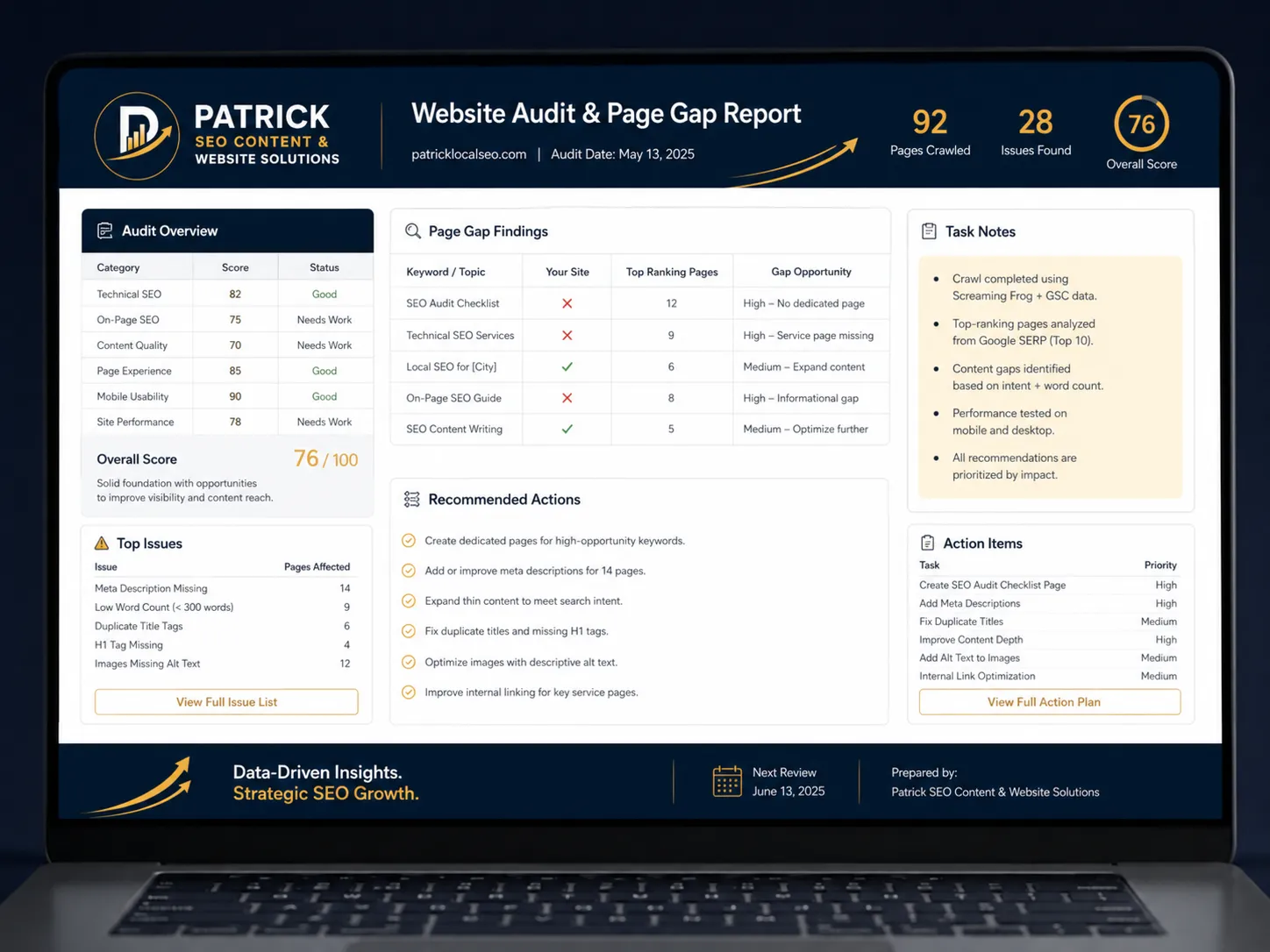
Location Page-Gap Planning
Audit work identifying missing priority cities, repetitive pages, service mismatches, weak local proof, internal-link gaps, and content priorities.
View Website SEO Audit →Clear content assets ready for review, implementation, or publication.
The project can cover one priority page, a focused location batch, a regional hub, or a complete service-area content map.
Page purpose, priority service, local audience, recommended URL, nearby areas, source information, and proof requirements.
Introduction, service coverage, local context, trust content, nearby areas, FAQs, internal links, and conversion CTA.
SEO title, meta description, heading structure, related-service links, nearby-location links, alt text, and schema recommendations.
Confirmed business facts, requested revisions, approved claims, final copy, live URL, and publication status when included.
A structured workflow from service-area facts to approved local content.
The process confirms the real coverage area, services available, local proof, nearby locations, customer requirements, and the correct page type before the content is written.
Verify
Confirm the location, service availability, operating model, travel limits, local proof, business information, and customer requirements.
Plan
Review existing pages, define the page purpose, choose the right URL, map services and nearby areas, and identify unique local sections.
Write & Review
Create the page copy, metadata, FAQs, internal links, trust content, and CTA, then confirm all business facts and claims.
Implement & Check
Publish the approved page when included and verify headings, links, metadata, schema, mobile layout, forms, and the live URL.
Strong local pages require accurate operating and service-area information.
The content should not invent offices, addresses, service areas, routes, availability, response times, prices, services, qualifications, project results, or customer claims. Missing facts should be confirmed before publication.
Location pages can strengthen local relevance, but they cannot guarantee rankings or leads in every city.
Results also depend on competition, proximity, authority, reviews, market demand, website quality, business operations, pricing, availability, service quality, and search-engine systems. The service focuses on accurate coverage, useful content, strong internal links, local trust, and clearer inquiry pathways.
Questions about location page content.
What is location page content?
Location page content explains how a business serves customers in a specific city, region, route, county, neighborhood, or service area. It can include local service details, customer scenarios, nearby areas, proof, FAQs, internal links, and a location-specific call to action.
Does every city need a separate page?
No. A standalone page is most useful for genuine priority areas with meaningful demand, service detail, local context, proof, and customer questions. Lower-priority areas may be covered through a regional hub or service-page section.
Can a service-area business create pages without a local office?
Yes, when the business genuinely serves the area and the page clearly describes the service-area model. The content should not imply a staffed office, storefront, or address that does not exist.
How do you make city pages unique?
Useful distinctions may include services available, local project or trip needs, property types, routes, destinations, nearby areas, reviews, completed work, FAQs, customer requirements, and genuine operational differences.
How should location pages link to service pages?
A location page should link to the specific services available there, while service pages can link to priority cities where the service is genuinely offered. Regional hubs, nearby-area links, route pages, projects, FAQs, and articles can support the structure.
Can you refresh existing city pages?
Yes. Existing pages can be reviewed for duplicate copy, weak local context, unsupported office claims, thin service detail, missing proof, poor internal links, outdated information, and unclear calls to action.
Can you publish the location pages on my website?
Publishing can be included through a separate implementation scope when the required website access, page template, approved content, images, forms, metadata, and technical requirements are available.
Do location pages guarantee local rankings?
No. Useful location pages can improve coverage, relevance, internal linking, trust, and customer clarity, but rankings depend on many additional local, competitive, technical, reputational, and operational factors.
Need stronger city or service-area pages for your local business?
Send the website, priority location, services available there, nearby areas, real customer or project examples, approved business facts, and the action visitors should take. The review can determine whether the area needs a dedicated city page, regional hub, route page, or supporting section.