Build local visibility around where the business actually serves customers.
Patrick SEO Content & Website Solutions helps service-area businesses organize their websites around real services, genuine coverage areas, customer-location needs, Google Business Profile alignment, local trust content, and clear quote or booking pathways. The goal is useful local coverage—not fake offices or dozens of duplicate city pages.
Connect the service, coverage area, customer need, proof, and next action.
Service-area businesses travel to customers, properties, venues, job sites, or pickup locations. The website should explain that operating model clearly.
The business serves customers at their location instead of relying only on a public storefront.
Contractors, transportation providers, cleaners, pest-control companies, restoration teams, mobile technicians, towing companies, photographers, and many other local businesses operate across a defined territory. Their websites need to explain both the service and the coverage area without pretending to have staffed offices in every city.
Service-area websites often confuse local reach with city-page volume.
More location pages do not automatically create a stronger local website. The page system should reflect the real operation, customer needs, travel limits, local proof, and services available in each area.
Fake or Unclear Locations
The website may imply offices, branches, or staffed locations that do not exist, making the business information difficult to trust and maintain.
Duplicate City Pages
Dozens of pages may repeat the same service copy with only the city name changed, offering little local usefulness or customer decision value.
Weak Service-Area Explanation
Customers may not know which cities, counties, routes, neighborhoods, or travel distances the business actually covers.
Profile and Website Mismatch
The Google Business Profile service area, categories, services, phone, hours, and linked website content may not tell the same business story.
No Local Proof
The site may lack completed jobs, customer reviews, route examples, project photos, service scenarios, or useful evidence connected to the coverage area.
Generic Contact Forms
The inquiry form may fail to collect the address, city, property type, route, urgency, passengers, project details, or photos needed to qualify the request.
Build a local website system around genuine coverage and customer intent.
The exact project depends on the current website, business model, services, operating radius, local competition, available proof, Google Business Profile, and the information the business can verify.
Create location pages selectively—not automatically for every nearby city.
A city page is most useful when the business genuinely serves the area and can provide enough distinct information to help local customers. The page should explain the service in that market, nearby coverage, real scenarios, local proof, and the correct inquiry path.
Choose the page type that matches the operating model.
Not every geographic keyword requires its own page. Some areas are better covered through a regional hub, service page, route page, or supporting section.
Local page structures adapted to how the business travels, serves, and qualifies customers.
Different service-area businesses require different location signals, proof, operational details, and inquiry fields.
Contractors & Home Services
Services, project types, materials, property conditions, estimates, inspections, photos, emergency needs, city coverage, and completed work.
View Contractor SEO →Limo & Transportation
Airports, routes, pickup cities, destinations, passenger capacity, luggage, occasions, fleet details, scheduling, and quote information.
View Limo SEO →Pest, Rodent & Wildlife Control
Pest type, property symptoms, inspection, treatment, recurring service, safety information, service radius, urgency, and preparation.
Cleaning & Restoration
Property type, affected area, emergency availability, equipment, service process, photos, estimates, insurance coordination, and local response limits.
Mobile Professional Services
Appointment locations, travel areas, on-site requirements, equipment, scheduling, client preparation, privacy, service duration, and cancellation rules.
Towing & Emergency Response
Vehicle or property location, destination, service type, road or site conditions, operating radius, availability, safety boundaries, and direct call paths.
Examples of local website structure across transportation and contractor businesses.
These examples demonstrate service pages, real coverage, city content, routes, forms, internal links, project or fleet information, and conversion pathways. They are not presented as unsupported ranking, traffic, lead, or revenue claims.
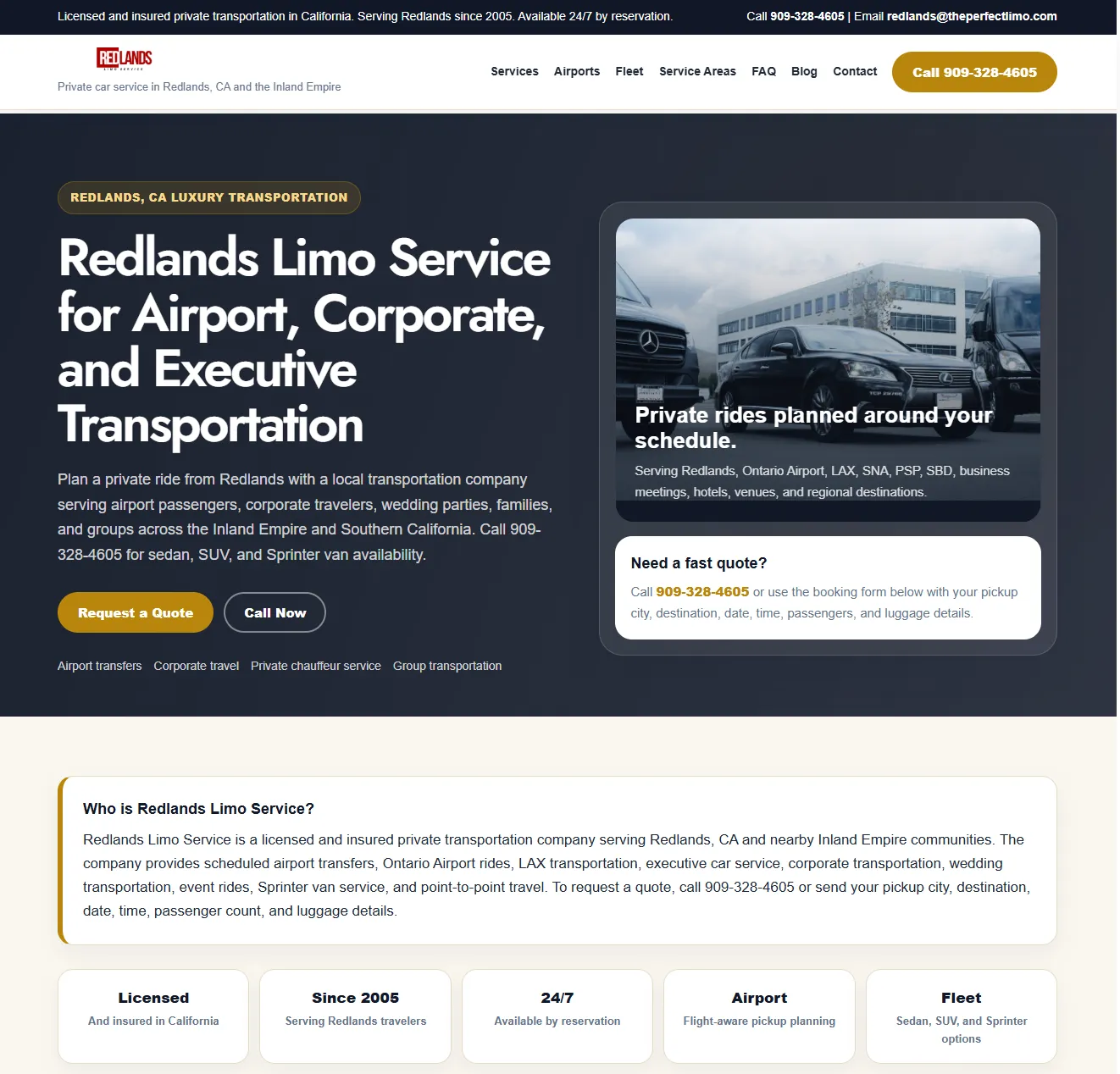
Redlands Limo Service
Transportation website structure covering services, airports, fleet, city pages, local trust, contact pathways, and reservation-focused content.
View Live Website →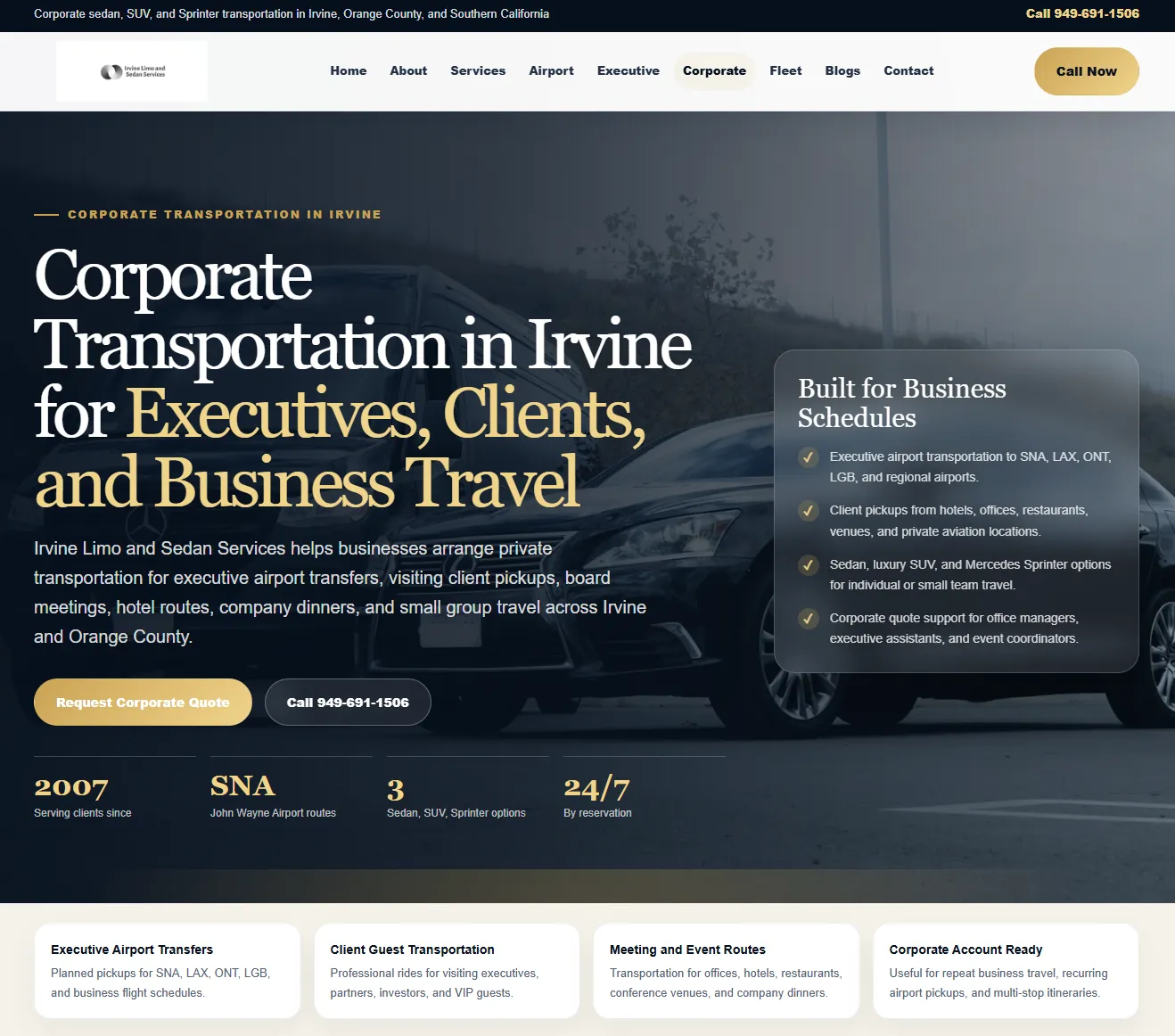
Irvine Limo and Sedan Services
Local transportation pages organized around services, fleet options, airport intent, service coverage, trust sections, and quote requests.
View Live Website →Wylie Concrete Kings
Contractor website migration and structure involving residential and commercial services, local coverage, forms, legal pages, URL preservation, and quality control.
View Live Website →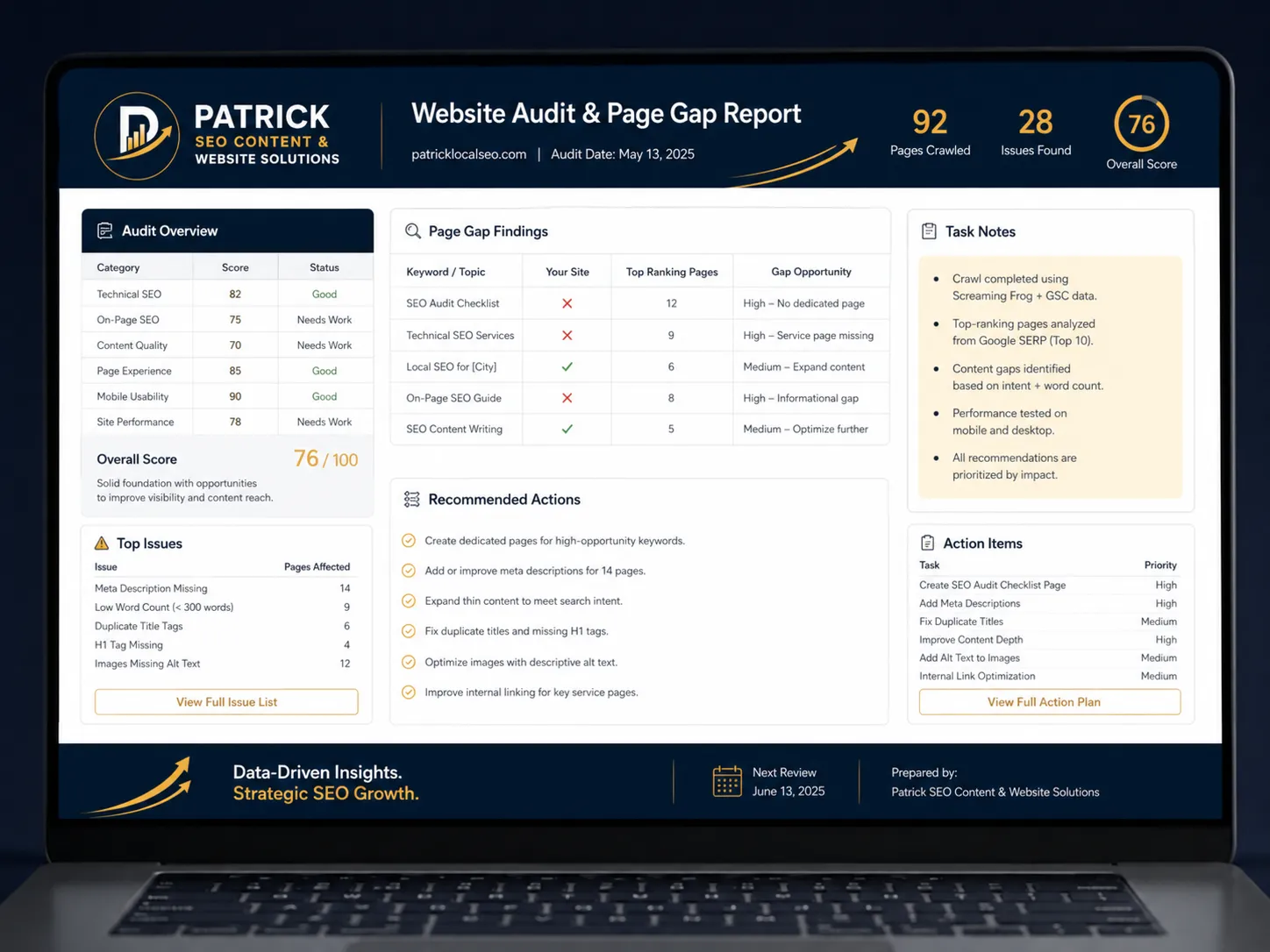
Coverage & Page-Gap Planning
Audit work identifying missing services, weak city coverage, duplicate location pages, local-proof gaps, internal-link opportunities, and implementation priorities.
View Website SEO Audit →Practical local assets connected to genuine coverage and customer action.
The work can begin as an audit, page-planning project, content phase, implementation sprint, or custom proposal.
Priority services, cities, regions, routes, supporting pages, proof assets, and customer pathways organized into a clear structure.
New or refreshed service, city, regional, route, trust, FAQ, and supporting content based on approved business information.
Profile alignment and links between the homepage, services, locations, routes, proof, articles, and contact sections.
A practical order for critical corrections, high-intent pages, local expansion, proof, profile content, and optional future work.
A structured path from operating facts to clearer local coverage.
The process begins with the real business model, services, travel area, profile, website, customer requirements, local proof, and operational limits.
Verify
Confirm services, business model, address or hidden-address setup, service areas, travel limits, hours, profile information, and customer requirements.
Map
Organize priority services, cities, regions, routes, proof, support content, internal links, and inquiry pathways.
Create
Write or refresh approved pages, metadata, local content, FAQs, proof sections, profile topics, links, and calls to action.
Implement
Publish approved work when included, verify forms, links, mobile layouts, schema, business facts, profile alignment, and the next priority.
Accurate service-area SEO depends on the real operating territory.
The project should not invent offices, addresses, service areas, availability, travel times, response times, services, prices, qualifications, or customer results. Missing facts should be confirmed before publication.
Local SEO can improve the website and profile, but it cannot guarantee local rankings, calls, bookings, or estimates.
Results also depend on proximity, competition, authority, reviews, market demand, service quality, pricing, availability, response time, customer experience, and search-engine systems. The work focuses on accurate coverage, useful pages, clearer structure, stronger trust, and better inquiry pathways.
Questions about local SEO for service-area businesses.
What is a service-area business?
A service-area business serves customers at their homes, properties, job sites, venues, pickup locations, or other off-site locations instead of depending only on customer visits to a public storefront.
Does a service-area business need city pages?
Selected city pages can be useful for genuine priority areas with distinct service context, customer questions, local proof, and enough information to justify a standalone page. A page is not required for every nearby city.
Can I rank in cities where I do not have an office?
A service-area business can create useful website content for genuine operating areas, but local visibility depends on many factors. The website should not imply a staffed office or public location that does not exist.
How many locations should the website target?
The number should be based on real coverage, demand, business value, available proof, service differences, and the ability to create useful content. Quality and operational relevance matter more than publishing the maximum number of pages.
How should service and city pages link together?
Service pages can link to priority locations where the service is available, while city pages can link to the specific services provided there. Regional hubs, route pages, project examples, FAQs, and supporting articles can strengthen the structure.
Can Google Business Profile content support service-area SEO?
Yes. Profile content can cover real services, service areas, project or trip examples, seasonal needs, customer preparation, reviews, and calls to action. The website should provide useful supporting destinations.
What should a service-area inquiry form collect?
The fields depend on the business but may include the service, address or city, property type, pickup and destination, date, urgency, project details, passengers, photos, measurements, preferred contact method, and other qualification information.
Does service-area SEO guarantee more local leads?
No. It can improve page coverage, local clarity, profile alignment, trust content, internal links, and customer pathways, but leads also depend on competition, proximity, reviews, authority, demand, pricing, availability, service quality, and response speed.
Need a clearer website plan for the areas your business actually serves?
Send the website, Google Business Profile, primary services, priority cities, travel limits, current location pages, and the inquiry details your business needs. The review can identify service gaps, weak city coverage, duplicate pages, profile mismatches, local-proof opportunities, internal links, and the best next implementation phase.