Service pages written to explain the offer, support local search, and guide the inquiry.
Patrick SEO Content & Website Solutions writes and refreshes service pages for local businesses. Each page is structured around a specific customer need, accurate service information, useful local context, trust-building details, common questions, internal links, metadata, and a clear next step.
Answer what the customer needs to know before they call, book, or request a quote.
A strong service page combines SEO structure with accurate business information and practical customer decision content.
A broad services page rarely gives every important offer enough room to rank, persuade, and convert.
Local customers often search for one specific service, problem, route, project type, or solution. A dedicated page can explain that service in greater depth, answer relevant objections, show how it fits the local business, and connect the visitor to the correct quote or contact path.
Pages can contain the right keyword and still fail to help customers.
The copywriting process reviews whether the page has a clear purpose, enough useful detail, accurate business information, credible proof, and a strong connection to related pages and customer actions.
One Page Covers Every Service
Multiple high-intent services may be compressed into short paragraphs, making it difficult to explain differences, answer questions, or create a useful internal-link structure.
Generic Introductions
The opening may repeat the company name and city without explaining the customer problem, service value, practical use case, or reason to continue reading.
Thin Service Details
The page may omit the process, scope, materials, vehicles, capacity, timing, exclusions, preparation, service area, or other facts customers need.
Weak Trust Content
Important decision information such as experience, process, quality control, reviews, project examples, service expectations, and approved qualifications may be missing.
No Local Usefulness
The page may insert a city name repeatedly without adding real service-area context, relevant destinations, local project needs, climate considerations, or genuine coverage details.
Unclear Next Step
Visitors may not know what information to provide, whether to call or submit a form, what happens after contact, or which related service better fits their need.
A complete content structure built around the service and the customer decision.
Not every page needs the same headings or length. The structure should reflect the service complexity, available proof, customer questions, local relevance, and the page’s role within the wider website.
Separate services when the customer need, scope, and decision process are meaningfully different.
Dedicated pages are useful when each service deserves its own explanation and search intent. They should not be created merely to produce more URLs. The goal is a cleaner website architecture—not a large collection of repetitive pages.
Broad service, distinct subservice, or supporting article?
The content type should match the customer’s purpose and the business’s ability to provide meaningful detail.
Service page content adapted to the operation—not copied from a generic template.
The same page structure does not fit every industry. Content should reflect the actual service process, customer questions, geographic coverage, terminology, proof, and quote requirements.
Limo & Transportation
Airport transfers, corporate travel, weddings, hourly service, routes, fleet options, passenger capacity, luggage, pickup procedures, and quote details.
View Limo SEO Service →Contractors & Home Services
Service scope, project types, materials, property conditions, process, inspections, estimates, service areas, warranties, and customer preparation.
Pest & Rodent Control
Pest type, warning signs, inspection, treatment approach, recurring service, property risks, preparation, safety information, and service-area coverage.
Professional Services
Client type, problem addressed, deliverables, consultation process, qualifications, documents needed, boundaries, and the next engagement step.
Health, Wellness & Personal Care
Service expectations, suitability, session process, scheduling, preparation, contraindications, aftercare, approved credentials, and clear limitations.
Emergency & High-Urgency Services
Availability, service area, response expectations, immediate customer actions, required information, safety boundaries, and direct contact options.
Examples of page structure and local-service content work.
These examples demonstrate service-page hierarchy, local relevance, customer decision content, internal linking, and calls to action. They are presented as completed-work examples rather than guaranteed performance claims.
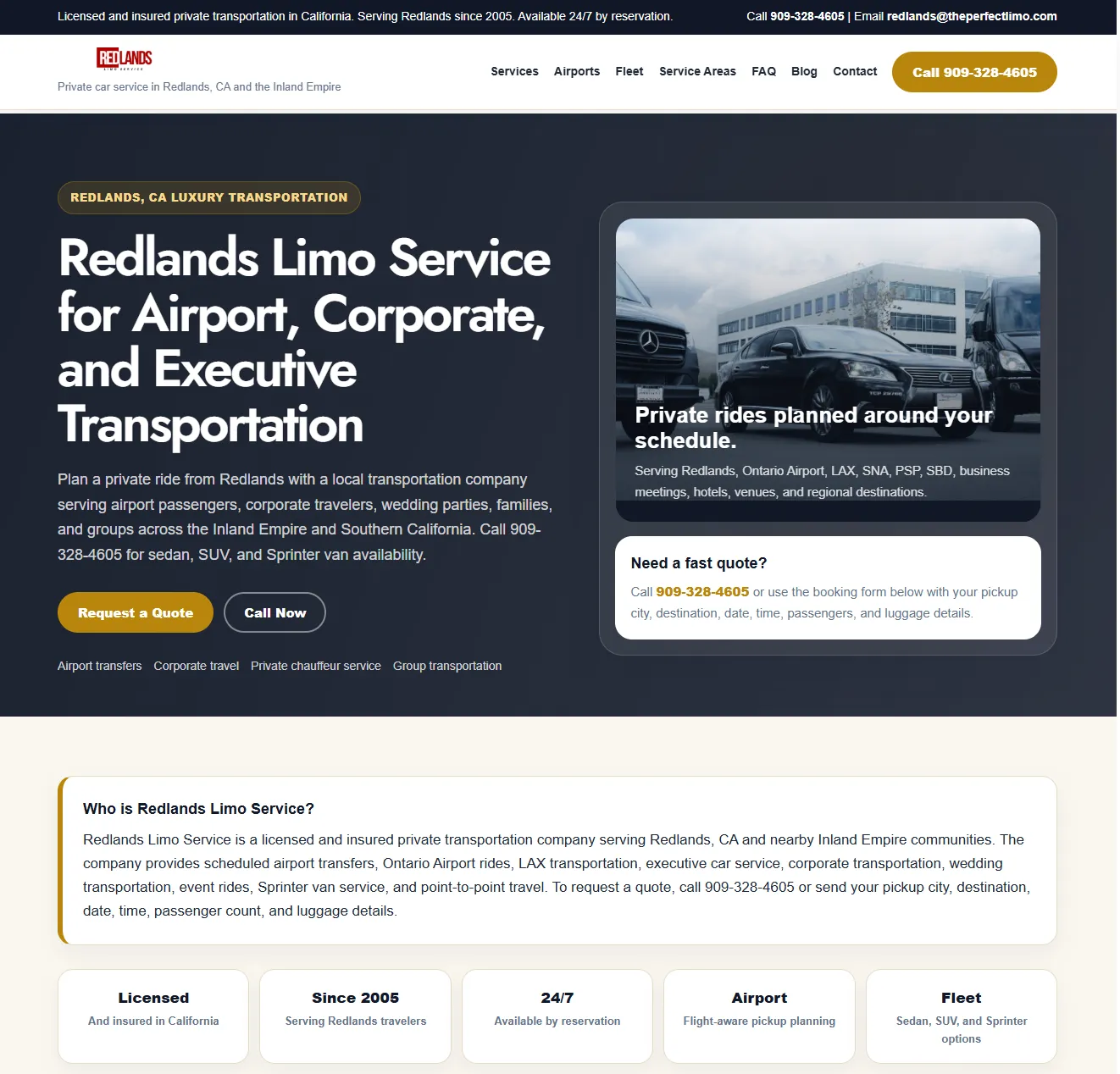
Transportation Service Pages
Airport, executive, wedding, hourly, point-to-point, group, fleet, and local transportation content organized around distinct customer needs.
View Live Website →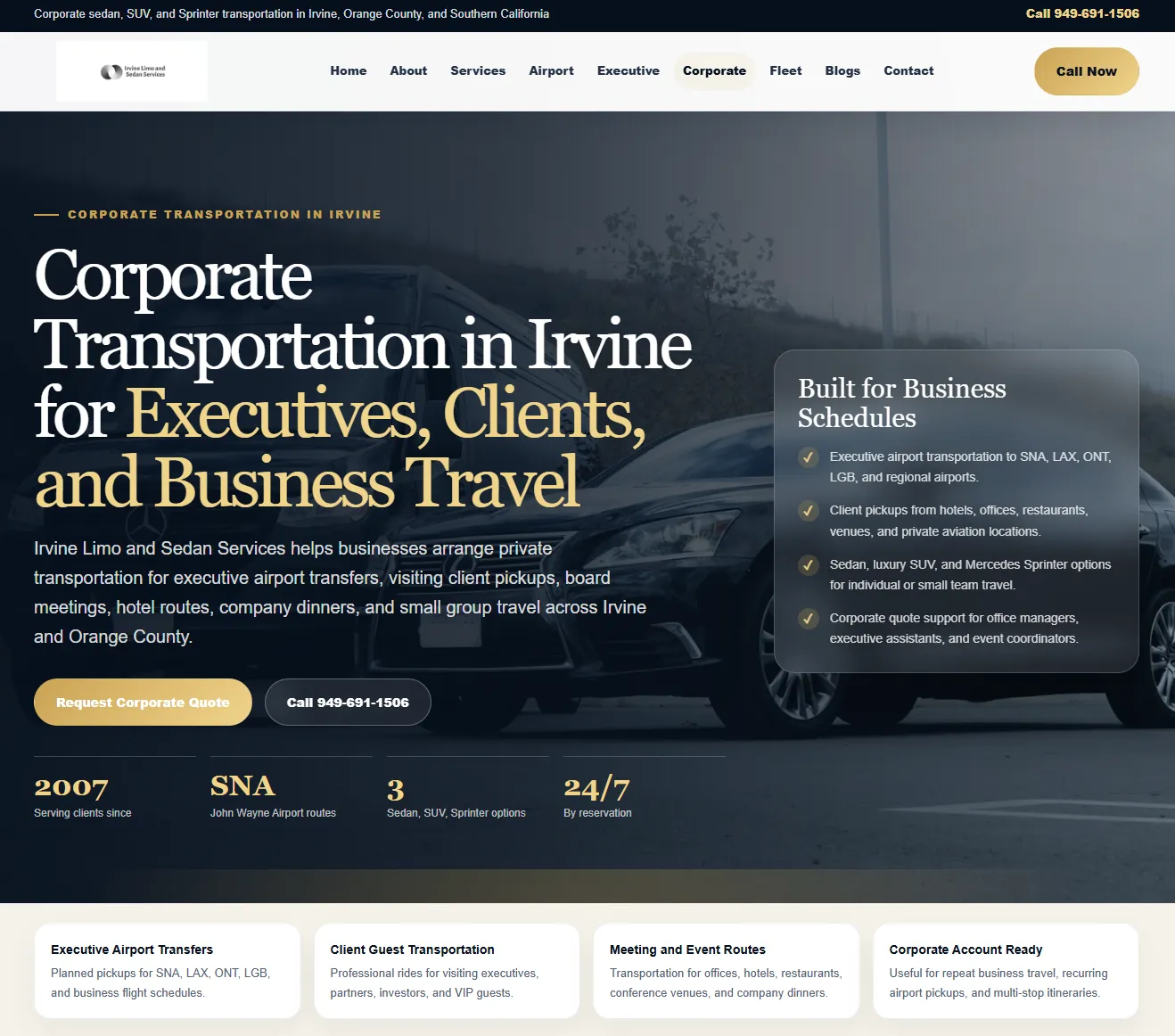
Service & Fleet Content
Service descriptions, vehicle use cases, local relevance, trust sections, airport content, and quote-focused page pathways.
View Live Website →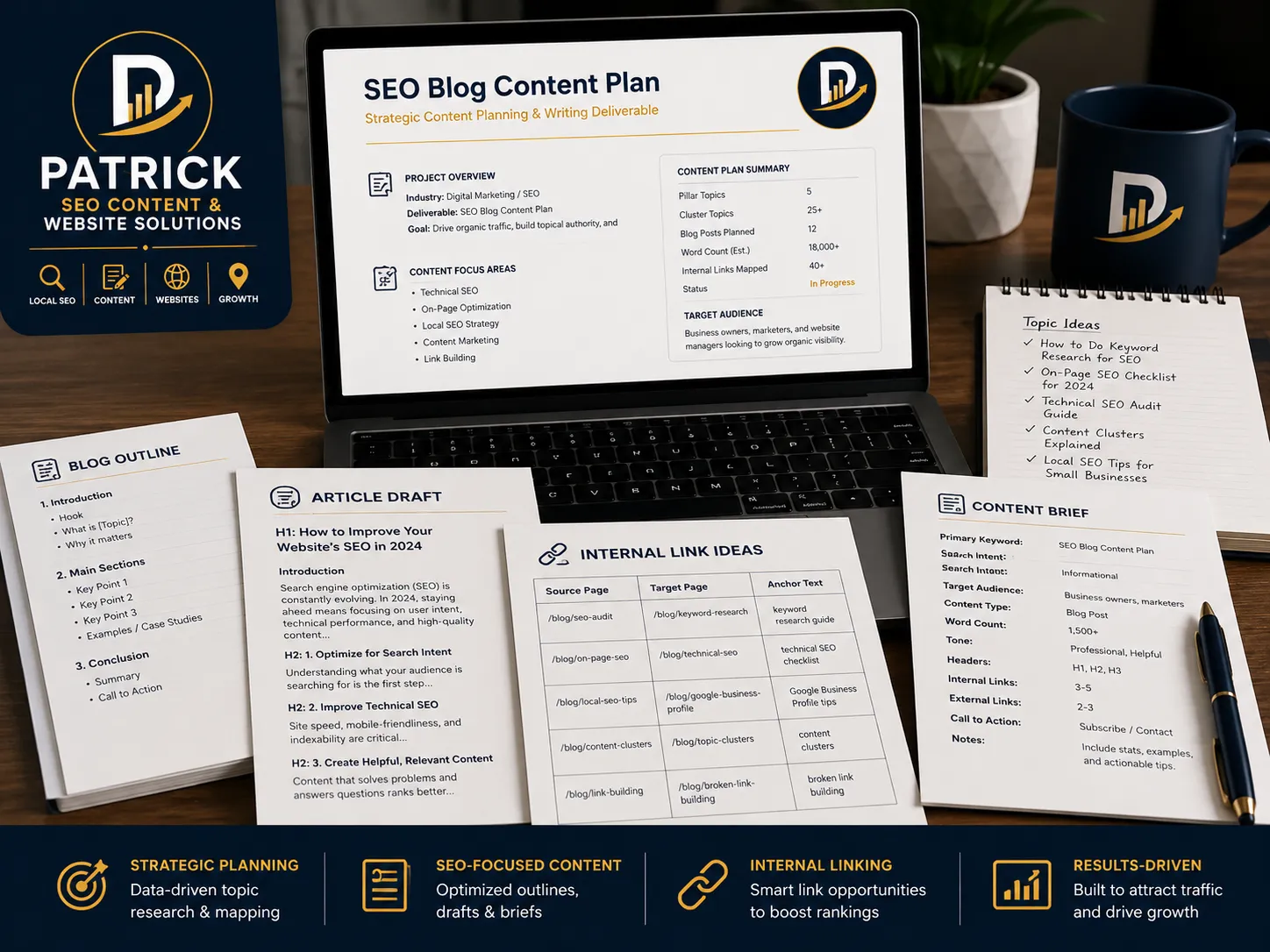
Content & Internal Link Plan
Supporting FAQs, articles, location content, and related-service links organized around priority service pages.
View Local SEO Content →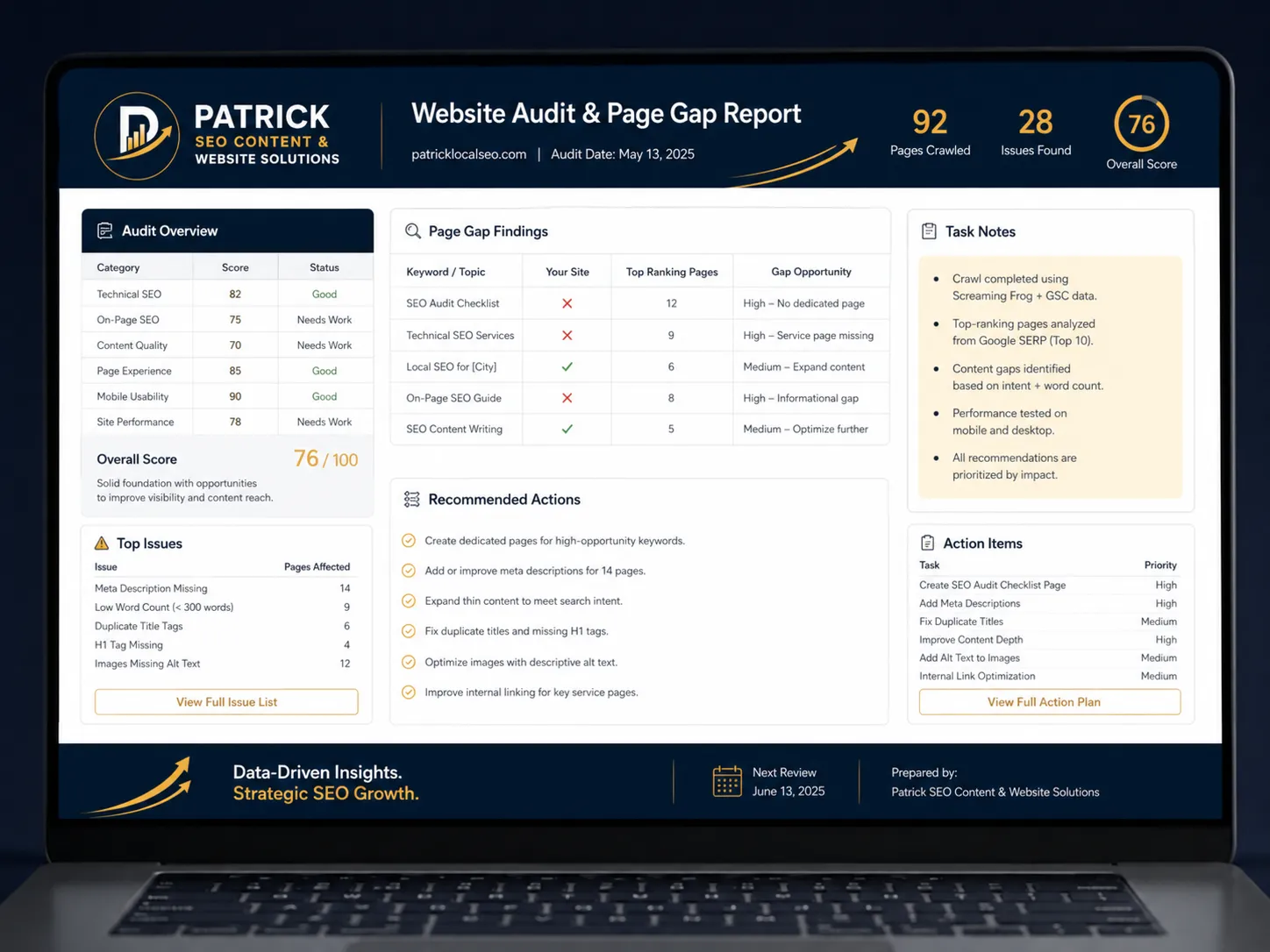
Page Gap & Rewrite Priorities
Identification of missing services, weak existing pages, overlapping intent, thin content, trust gaps, and the pages that should be handled first.
View Website SEO Audit →Clear page assets ready for review, implementation, or publication.
The deliverable can be writing-only or part of a broader implementation project. The scope should state whether the service includes research, page planning, revisions, website publishing, metadata, schema, internal links, and post-publication checks.
Primary intent, target customer, service facts, page role, supporting questions, recommended URL, and required source information.
Introduction, headings, service details, trust sections, local context, FAQs, objections, and calls to action.
SEO title, meta description, internal links, related pages, suggested anchor text, image alt text, and schema recommendations.
Client-confirmed business facts, requested changes, approved claims, final copy, and implementation status.
A structured workflow from source information to approved page content.
Accurate service pages require more than keyword research. The process should confirm what the business actually offers, where it operates, how the service works, which claims are approved, and what the customer needs before taking action.
Research & Brief
Review the website, service details, search intent, competitors, page gaps, customer questions, and available proof.
Structure & Draft
Plan the page hierarchy and write the service explanation, local context, trust content, FAQs, links, metadata, and CTA.
Verify & Revise
Confirm business facts, remove unsupported claims, resolve unclear scope, and complete the approved revision round.
Implement & Check
Publish the approved content when included, verify headings, links, metadata, schema, mobile layout, forms, and the live page.
Accurate source information produces stronger and safer service copy.
The writer should not invent services, locations, vehicles, materials, prices, policies, guarantees, certifications, experience, turnaround times, availability, or customer results. Missing business facts should be requested or clearly marked for confirmation.
SEO copy improves the page asset; it does not guarantee rankings, traffic, inquiries, or revenue.
Search performance also depends on competition, authority, reviews, technical quality, local prominence, demand, backlinks, business operations, and search-engine systems. The service focuses on producing accurate, useful, well-structured content and a clearer customer pathway.
Questions about service page SEO copywriting.
What is service page SEO copywriting?
Service page SEO copywriting is the planning and writing of a commercial website page around a specific service, customer need, search intent, business process, local context, trust information, FAQs, internal links, metadata, and conversion action.
How is a service page different from a blog post?
A service page explains an offer the business provides and guides the customer toward a quote, booking, appointment, call, or inquiry. A blog post usually answers a narrower informational question and should support the relevant service page through internal links.
Does every service need a separate page?
No. A separate page is most useful when the service has distinct customer intent, scope, questions, use cases, or conversion needs. Closely related variations may be clearer on one well-structured page.
Can you refresh an existing service page?
Yes. Existing pages can be improved for unclear introductions, thin service descriptions, weak headings, missing local context, poor trust content, incomplete FAQs, weak internal links, outdated claims, and unclear calls to action.
How long should a service page be?
There is no fixed word count that fits every service. The page should be long enough to explain the offer, answer important customer questions, establish trust, provide accurate local context, and guide action without padding the content.
Does the service include keyword research?
The page brief can include search-intent and topic review, relevant terminology, customer questions, competing page patterns, and potential overlap with existing pages. The purpose is to guide the page—not force repeated keywords into the copy.
Can you publish the content on my website?
Publishing can be included in a separate implementation scope when the required website access, builder, page template, images, forms, approvals, and technical requirements are available.
Does SEO copywriting guarantee rankings or leads?
No. The service improves the page’s clarity, relevance, structure, usefulness, trust content, internal links, and conversion pathway. Rankings and leads depend on many additional competitive, technical, reputational, and operational factors.
Need a stronger page for an important local service?
Send the website, service name, target service area, current page if one exists, business facts, customer questions, approved proof, and the action you want visitors to take. The review can identify whether the page needs a rewrite, a new dedicated URL, stronger internal links, or broader implementation support.