Redesign the website without losing the pages that already matter.
Patrick SEO Content & Website Solutions helps local service businesses rebuild outdated, confusing, or difficult-to-manage websites into clearer mobile experiences with stronger page structure, better service content, cleaner calls to action, and a controlled migration plan.
Keep what is useful. Fix what is weak. Rebuild what is holding the site back.
A professional redesign should improve the customer journey while protecting important content, URLs, forms, tracking, and search visibility.
A local business website redesign should improve structure, trust, usability, and lead flow.
Changing colors and fonts does not solve weak service pages, confusing navigation, poor mobile layouts, missing local content, broken forms, thin calls to action, or URLs that have been replaced without a redirect plan. The redesign should begin with the business goals and the existing website—not with a blank template.
Signs the current website is making the business harder to understand or contact.
A redesign may be appropriate when the existing site cannot support the current services, locations, customer questions, marketing work, or operational needs.
Outdated or Inconsistent Design
The website may look different from page to page, use old branding, rely on hard-to-read sections, or no longer represent the quality of the business.
Weak Mobile Experience
Text may be too small, buttons difficult to tap, forms hard to complete, images oversized, and navigation frustrating on the devices customers actually use.
Unclear Service Structure
Important services may be buried inside one page, missing from the navigation, poorly explained, or disconnected from relevant locations and supporting content.
Low-Quality Conversion Paths
Visitors may not know whether to call, request a quote, submit a form, choose a service, or provide the information needed for the business to respond.
Difficult Website Management
The current platform, builder, theme, or page setup may make routine updates slow, fragile, expensive, or dependent on tools the business no longer wants to use.
SEO and Migration Risk
A redesign may be needed, but replacing URLs, metadata, content, internal links, tracking, or schema without a plan can create avoidable losses and broken pages.
A structured rebuild from the current website to a cleaner local-business platform.
The exact project scope depends on the existing website, page count, platform, content quality, required functionality, and whether the project is a visual refresh, page-by-page rebuild, platform migration, or broader content restructure.
Do not throw away useful website assets simply because the design is changing.
Existing pages may already have links, history, search visibility, customer value, or operational importance. The redesign should identify which assets must remain unchanged, which need improvement, and which can be consolidated or redirected.
Every removed, renamed, merged, or replaced page should have a documented reason.
The project should not silently delete pages or replace the entire URL structure for convenience. Changes are easier to verify when the old and new websites are mapped before launch.
Choose the level of work based on the real condition of the website.
Not every business needs a complete rebuild. A focused refresh may be enough when the platform and page structure are sound. A full redesign is more appropriate when the problems affect most pages, mobile behavior, website management, content architecture, or technical reliability.
Website Refresh
Best for a site with a usable platform and mostly correct page structure that needs stronger branding, spacing, typography, calls to action, images, content sections, and mobile polish.
- Keep the current platform and most templates
- Improve selected high-priority pages
- Refresh visual and conversion elements
- Lower migration complexity
Full Website Redesign
Best for a site with widespread layout problems, outdated templates, weak mobile behavior, poor page hierarchy, difficult editing, broken functionality, or a platform migration requirement.
- Rebuild templates and page system
- Review the complete site architecture
- Migrate content and functionality carefully
- Complete launch and post-launch checks
Examples of local-business website design and page-structure work.
These projects demonstrate experience with website structure, service content, local relevance, responsive layouts, calls to action, navigation, and quality-control work. They are presented as completed-work examples rather than unsupported claims about traffic, rankings, leads, or revenue.
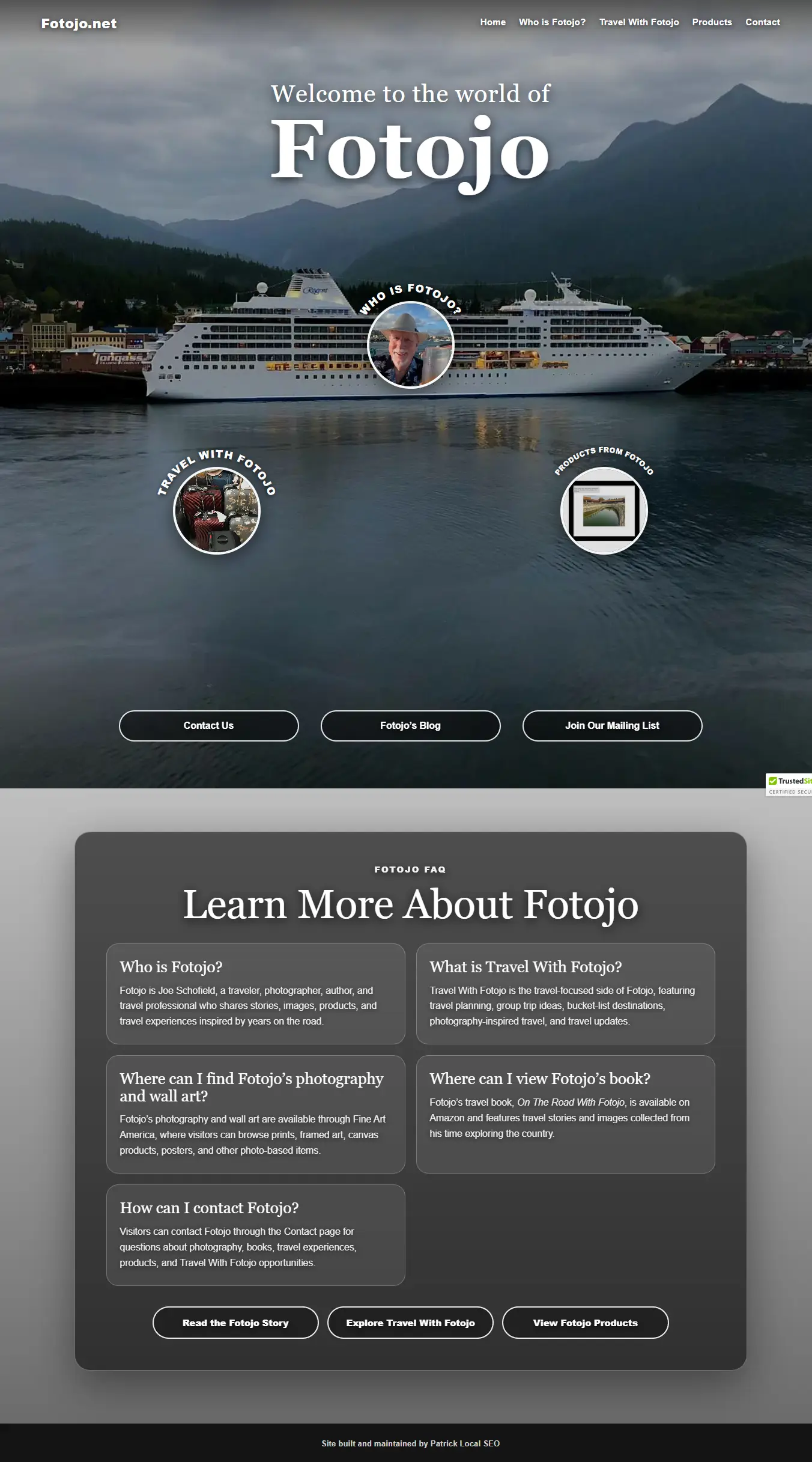
Fotojo.net
A local-business website project demonstrating visual presentation, page organization, service communication, responsive design, and customer contact pathways.
View Live Website →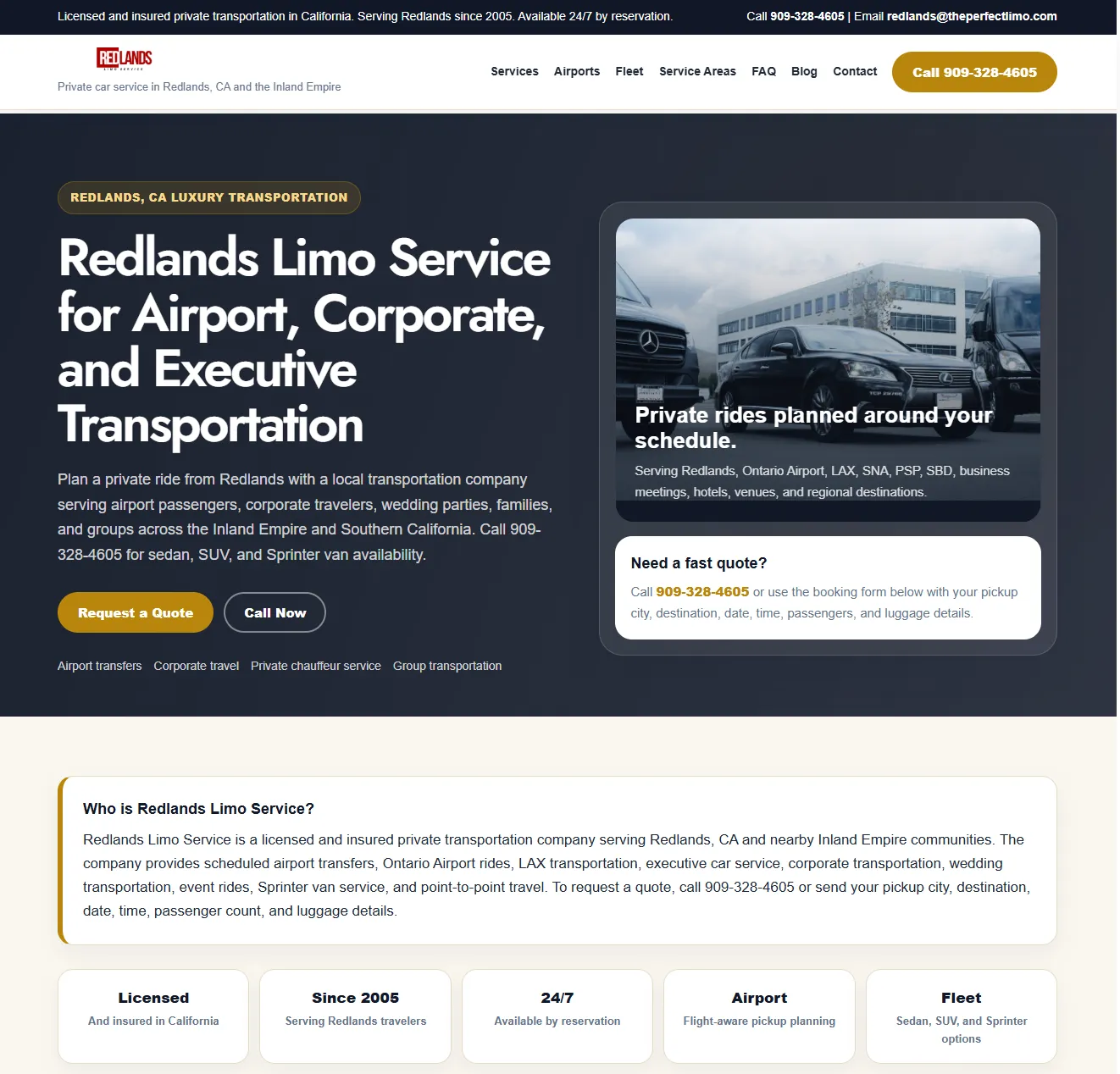
Redlands Limo Service
A service-business website with a structured homepage, service pages, airport content, fleet information, local coverage, trust sections, and inquiry-focused calls to action.
View Live Website →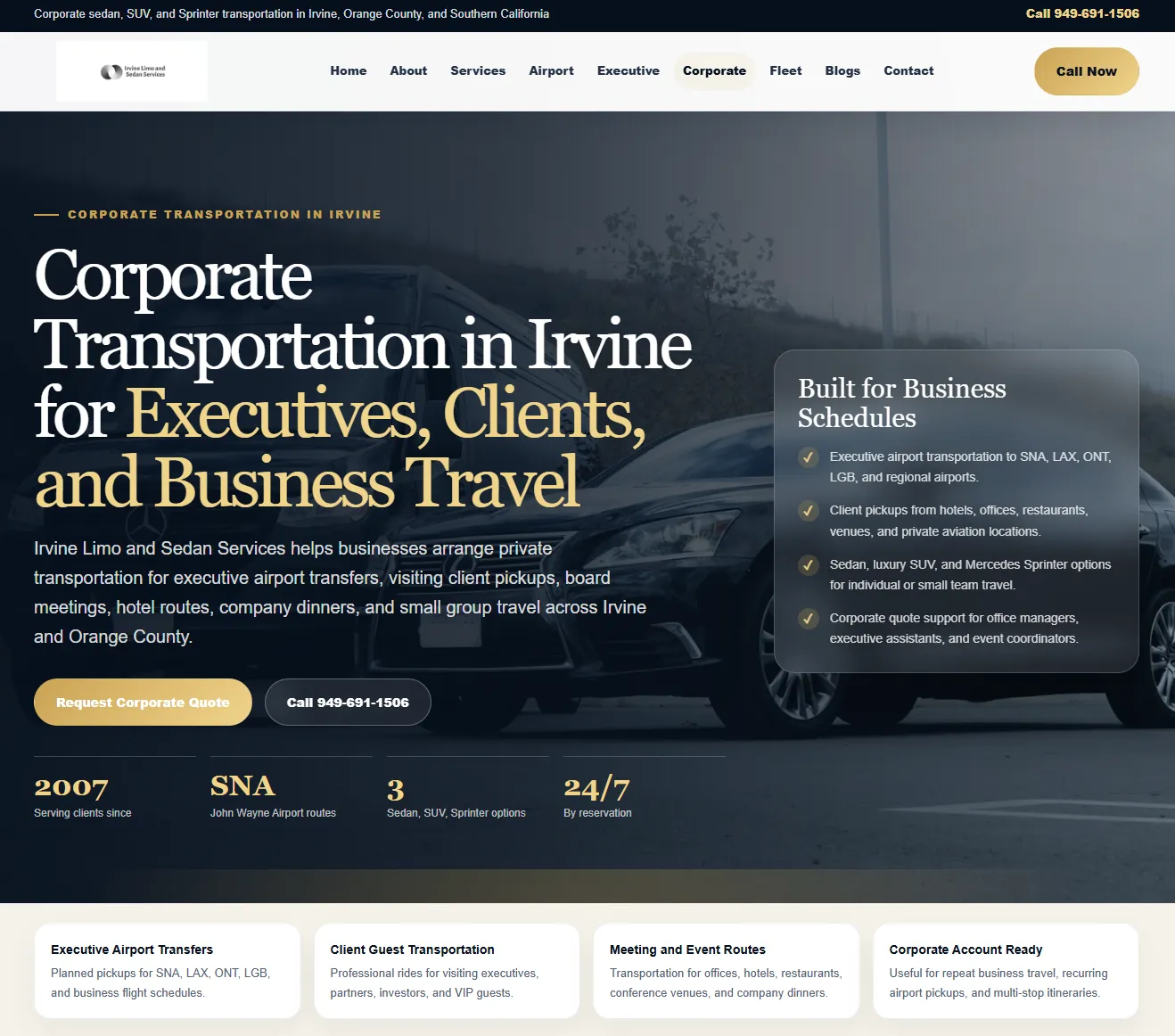
Irvine Limo and Sedan Services
A local transportation website project showing page hierarchy, service and fleet content, local SEO structure, mobile layout, and quote-request pathways.
View Live Website →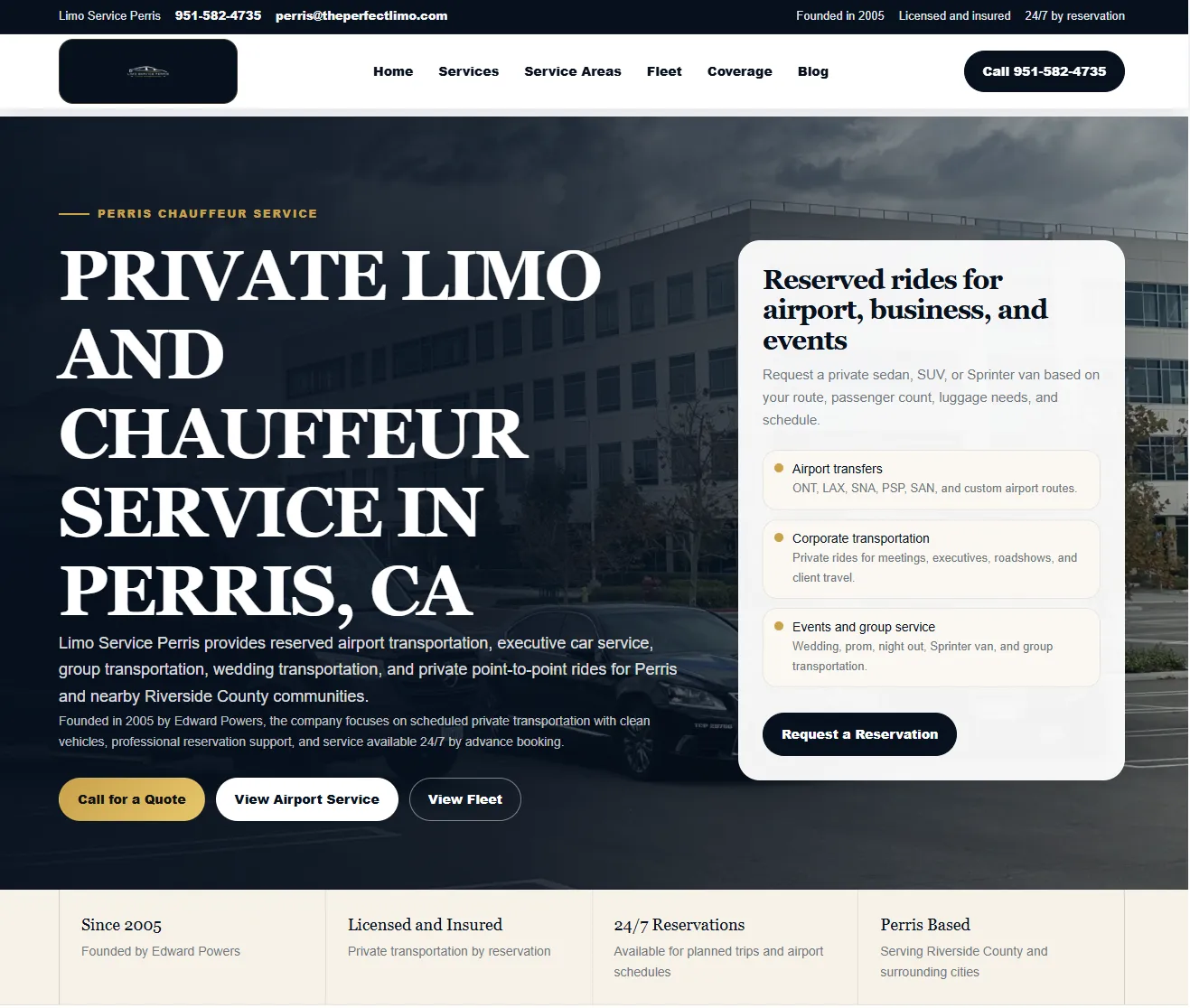
Limo Service Perris
A local-service website example with organized transportation content, service relevance, trust information, responsive sections, and clear contact direction.
View Live Website →A redesign should define exactly what is being reviewed, rebuilt, transferred, and tested.
Deliverables vary by project, but the scope should be specific enough to distinguish included work from optional content, premium tools, external services, and future enhancements.
A documented list of existing pages, planned pages, preserved URLs, revised pages, and required redirects.
Approved page layouts built and reviewed for desktop, tablet, and mobile presentation.
Approved content, headings, metadata, internal links, schema, images, and important business information.
Checks for links, forms, redirects, tracking, indexing settings, mobile behavior, and visible content issues.
A controlled workflow from current-site review to verified launch.
A rebuild is easier to manage when the business information, page inventory, content responsibilities, revision process, platform requirements, and launch conditions are established before development moves too far.
Audit & Inventory
Review the current website, pages, URLs, content, forms, tracking, technical dependencies, and business requirements.
Plan & Approve
Confirm the page map, visual direction, preserved assets, content needs, project boundaries, and redesign priorities.
Build & Review
Create the approved templates and pages, migrate content, connect links and forms, and complete revision rounds.
Test & Launch
Verify the rebuilt site, complete URL and redirect checks, confirm tracking and forms, launch, and review visible issues.
Keep the project clear before development begins.
Website redesign pricing and timing depend on the number of pages, amount of content work, platform, integrations, forms, custom functionality, premium tools, access requirements, migration complexity, and approval speed.
The redesign moves faster when the business can provide accurate source information.
Useful inputs include website access, domain and hosting details, page priorities, business information, services, locations, brand assets, approved images, contact routing, form requirements, integrations, examples, and one person authorized to approve the work.
Questions about website redesigns for local businesses.
What is included in a local business website redesign?
The scope can include the current-site review, page and URL mapping, responsive layouts, service-page structure, content transfer or refresh, forms, internal links, metadata, schema, tracking checks, migration, launch testing, and approved revision rounds.
Will the redesign keep my existing page URLs?
Important URLs should be preserved whenever they still serve the correct purpose. When a URL must change, the project should document the reason and add an appropriate redirect to the most relevant replacement page.
Can you redesign an existing WordPress website?
Yes. The project can review an existing WordPress site and determine whether it should be refreshed within the current setup, rebuilt with a cleaner template system, or migrated based on the project requirements and access available.
Do I need new website content during the redesign?
Not every page needs completely new copy. Useful existing content can be retained, while weak introductions, thin service sections, outdated claims, missing FAQs, unclear calls to action, and poor local information can be improved.
How do you protect SEO during a redesign?
The project can inventory important URLs, preserve useful content and metadata, map internal links, plan redirects, transfer schema and tracking, check indexing settings, and compare the rebuilt site against the approved page map before launch.
How long does a website redesign take?
Timing depends on page count, content readiness, platform, integrations, access, revision speed, and migration complexity. A reliable schedule should be confirmed only after the current website and required scope are reviewed.
Can forms, analytics, and tracking be transferred?
Existing forms, analytics, tag management, verification codes, thank-you pages, and tracking requirements can be reviewed and reconnected when the necessary account access and implementation details are available.
Does a website redesign guarantee better rankings or more leads?
No. A redesign can improve page quality, usability, mobile experience, structure, trust content, local relevance, and conversion paths, but rankings and leads also depend on competition, demand, authority, reviews, pricing, operations, and ongoing marketing.
Need a cleaner website without creating unnecessary migration risk?
Send the current website, main services, target locations, known problems, preferred platform, required forms or integrations, and the pages that matter most. The initial review can identify whether the project needs a focused refresh, complete redesign, content restructure, or platform migration.