A clear workflow from website review to focused local SEO improvements.
Every project starts by understanding the business, services, locations, website, Google Business Profile, customer journey, and existing content. From there, the work is organized into priorities so each page, post, link, and website update supports a practical business goal.
Review. Plan. Create. Improve.
The process keeps local SEO work connected to real services, target locations, customer questions, conversion paths, and the pages most likely to support qualified inquiries.
Local SEO becomes easier to manage when every task has a clear reason and order.
Publishing random pages or posts can create more work without fixing the main website gaps. A structured process identifies what the business already has, what customers still need to understand, which services and locations deserve dedicated coverage, and which improvements should happen before additional content is added.
Six stages from business context to ongoing improvement.
Each stage produces a useful decision, deliverable, or quality check. Smaller projects may combine stages, while larger website and content projects may repeat them across multiple services or locations.
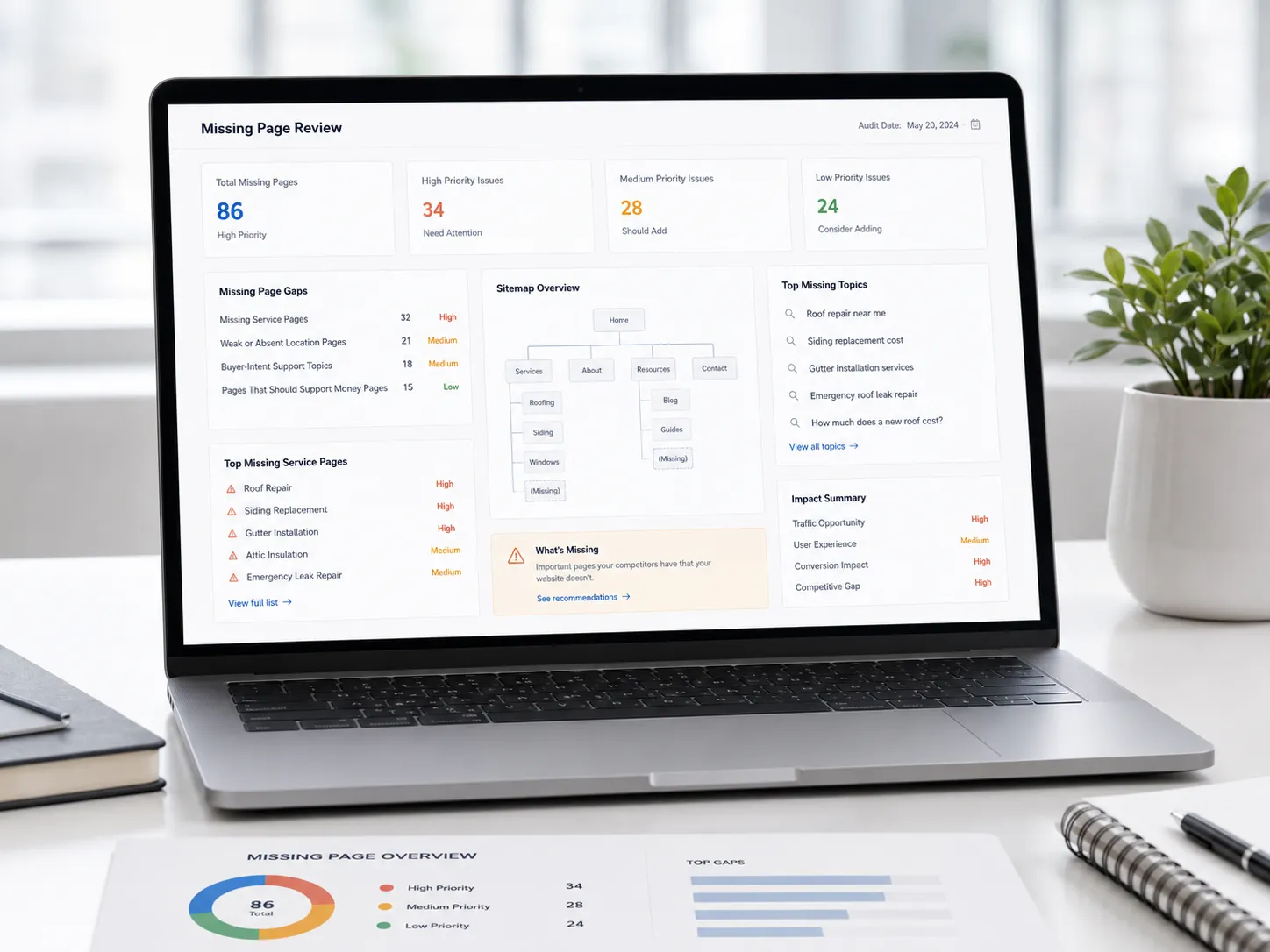
Business & Website Discovery
Start with the services, service areas, customer types, current website, Google Business Profile, business information, existing content, and the main goals for the project.
- Business and offer review
- Priority services and locations
- Current website and GBP context
- Customer and conversion goals
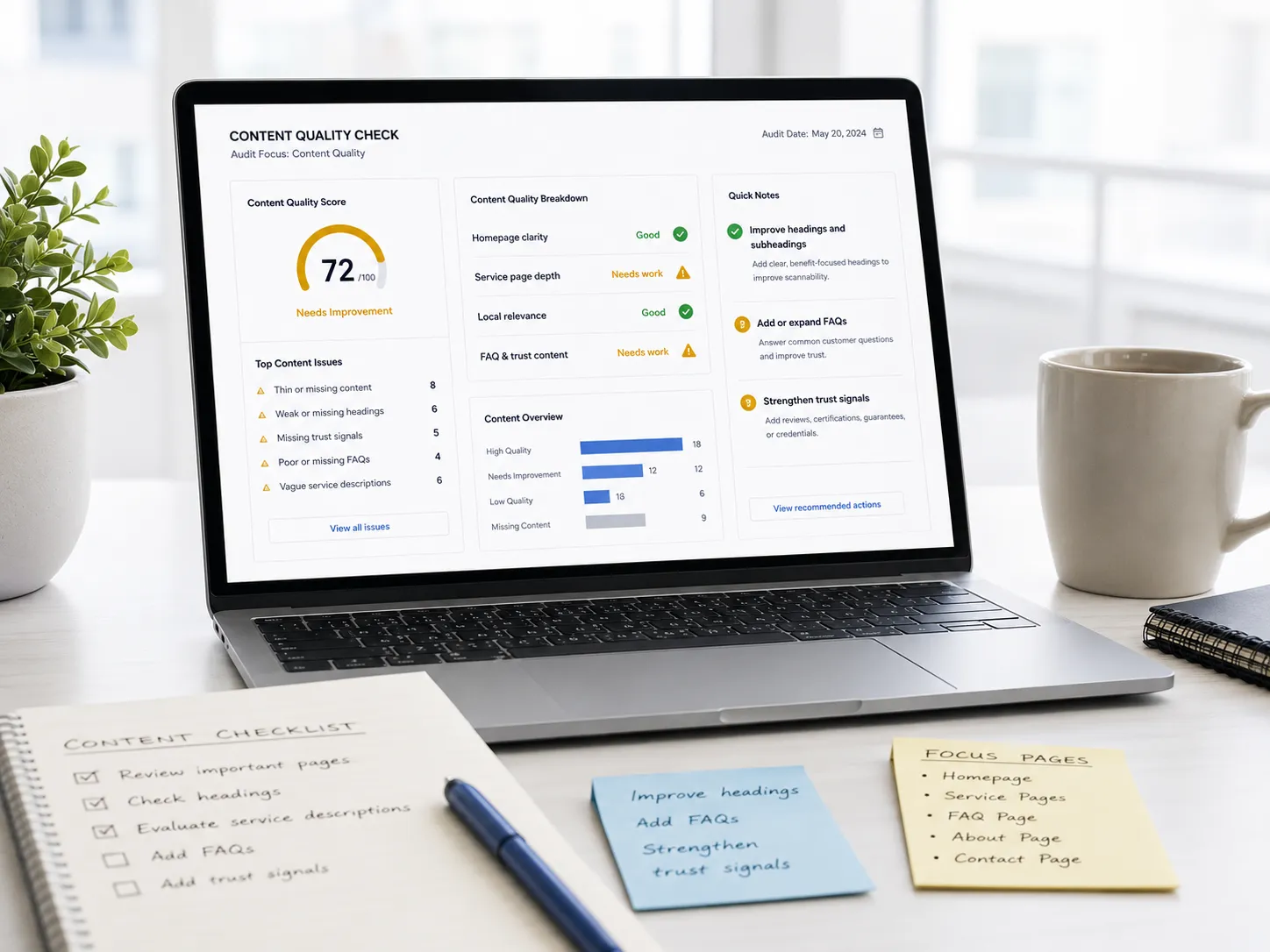
Audit & Gap Review
Review page coverage, content quality, headings, metadata, internal links, local relevance, trust sections, calls to action, and obvious inconsistencies that could weaken the customer journey.
- Missing service and city pages
- Weak or outdated content
- Internal link and CTA gaps
- Profile and website consistency
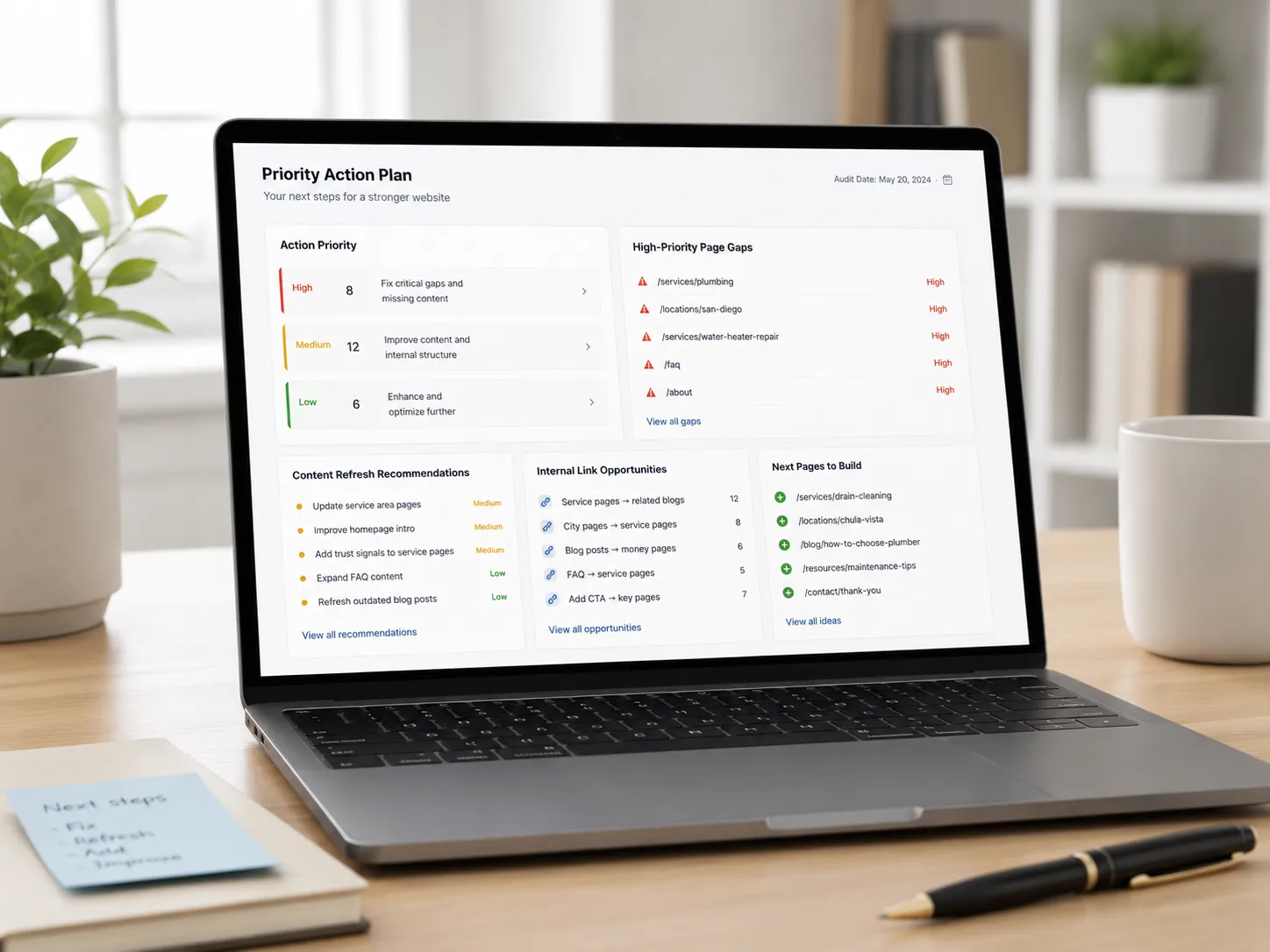
Priority Roadmap
Organize the findings into a practical order based on business value, customer intent, current weaknesses, available assets, and the pages or profile updates that should support later work.
- Fix-now priorities
- Pages to refresh or create
- Content and GBP topic plan
- Internal linking sequence
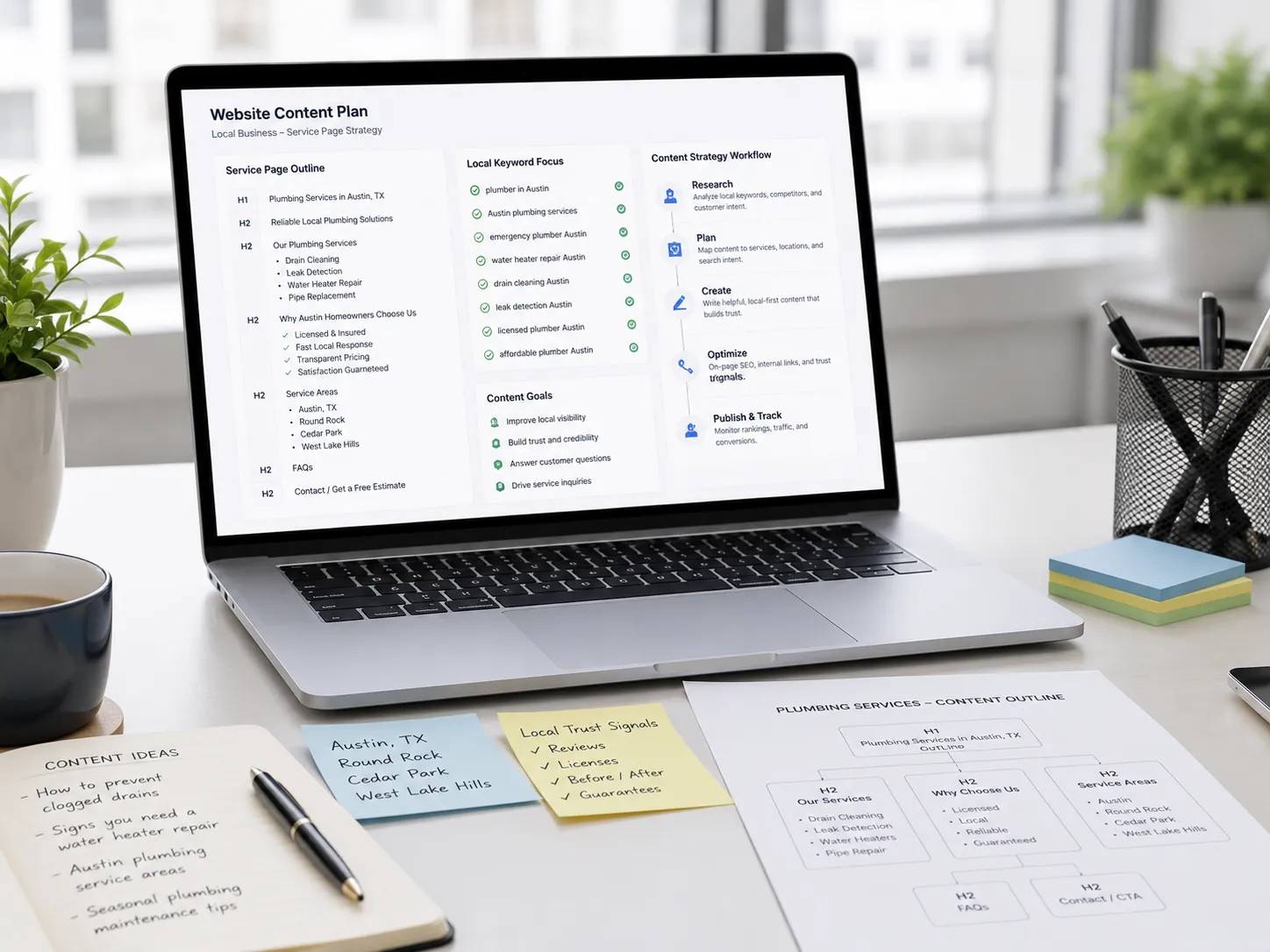
Content & Page Production
Write or rebuild the approved pages, GBP posts, FAQ sections, metadata, supporting content, trust copy, and conversion sections around the agreed services, locations, and customer questions.
- Service and location page copy
- GBP post batches
- SEO metadata and headings
- FAQs, trust, and CTA sections
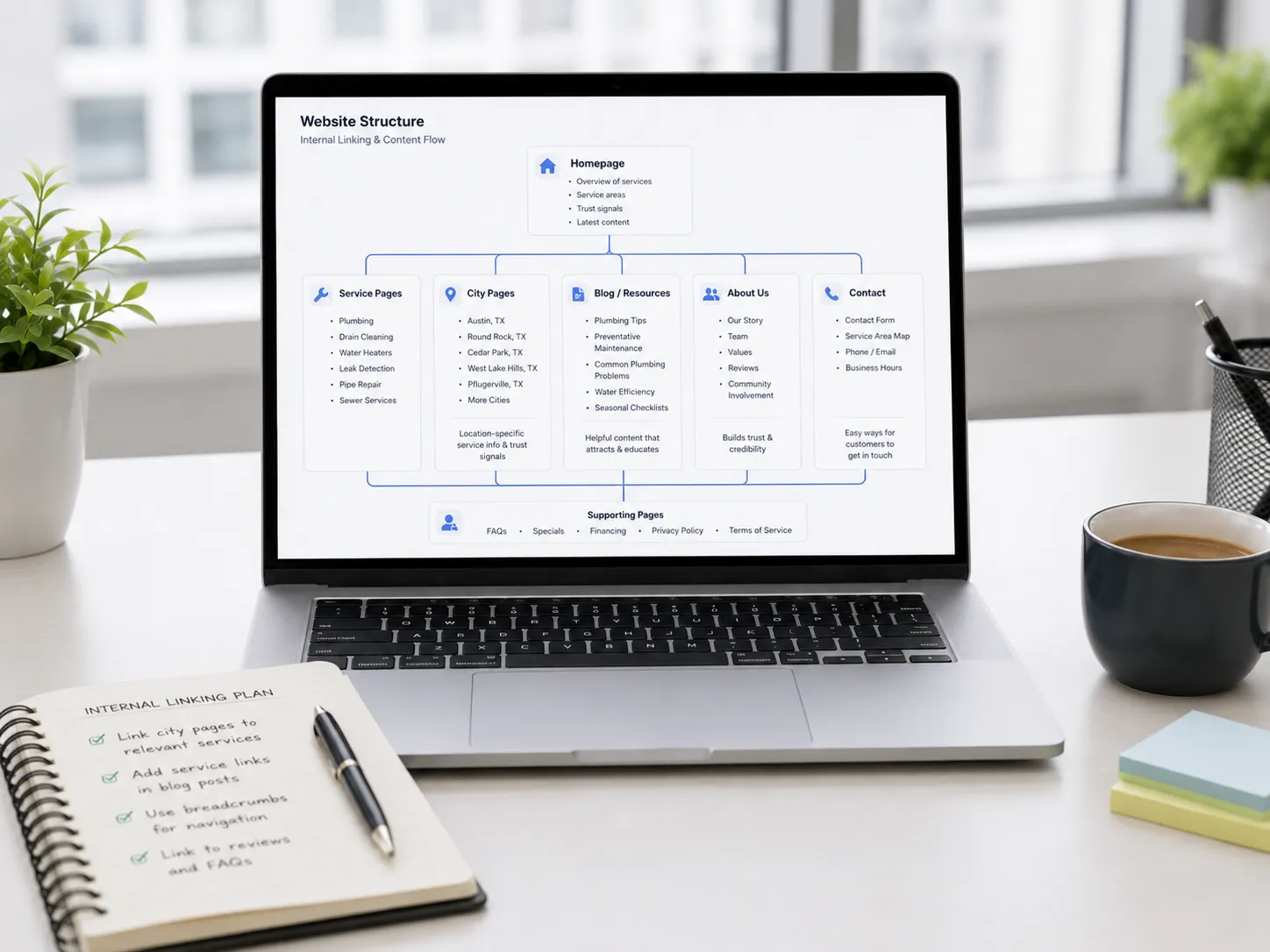
Implementation & Quality Check
Confirm that the content is placed correctly, links work, important business details remain consistent, headings are organized, mobile spacing is usable, and the final page has a clear next action.
- Desktop and mobile review
- Link and CTA testing
- Business detail verification
- Schema and page structure checks
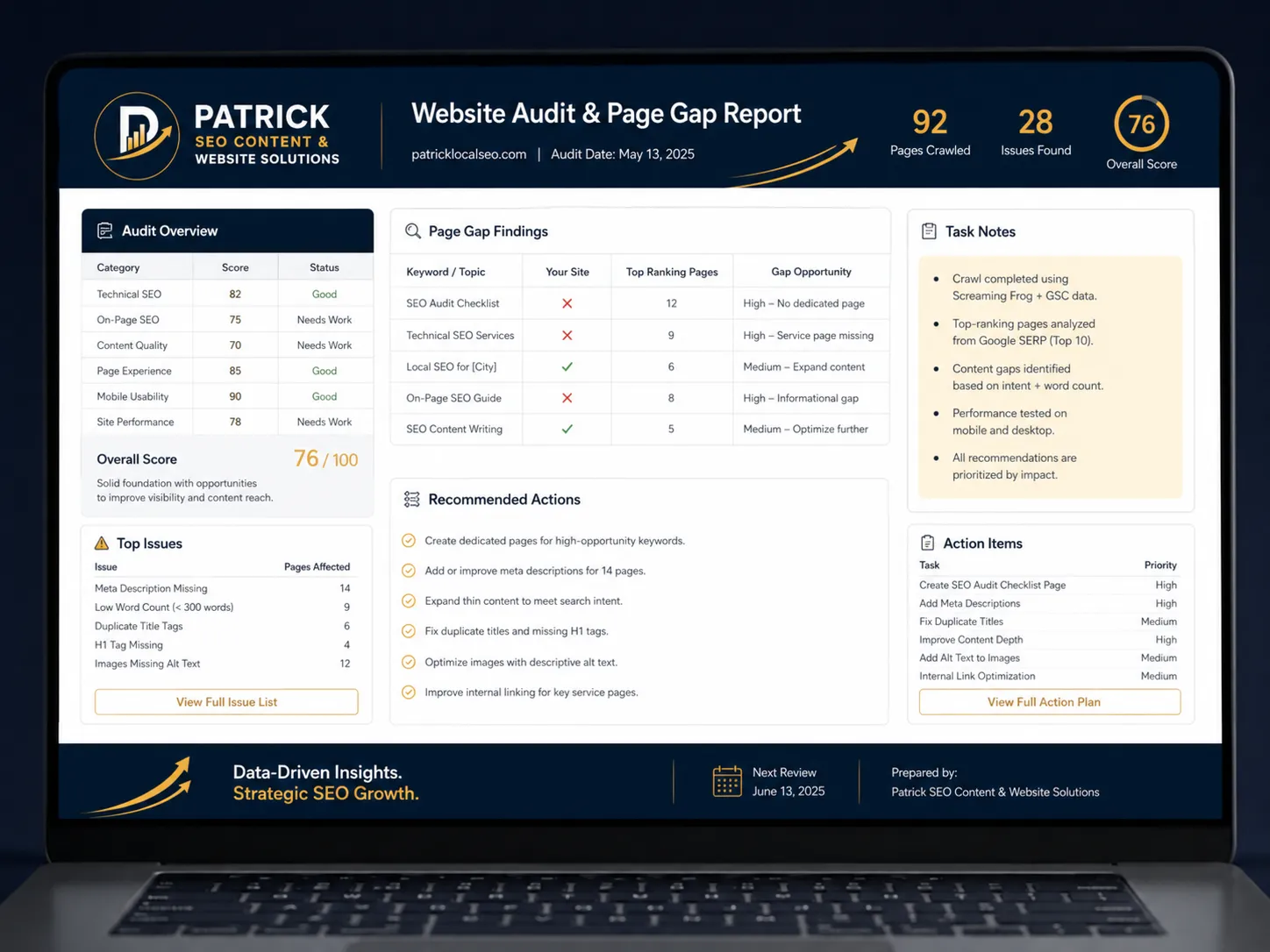
Progress Review & Next Steps
Document what was completed, explain why it matters, identify remaining gaps, and recommend the next reasonable priority without making unsupported ranking, lead, or revenue promises.
- Completed-work summary
- Small-win reporting
- Remaining page and content gaps
- Next priority recommendation
Better project inputs lead to more accurate pages, posts, and recommendations.
The process does not require a complicated onboarding package. The most useful starting information is the current website, the main services, target cities or service areas, correct business details, and any existing brand, fleet, product, team, or project assets that should guide the work.
Business accuracy comes before optimization.
Names, phone numbers, addresses, service areas, policies, fleet details, product information, hours, and third-party links should be verified before they are repeated across pages or profiles.
Clear deliverables tied to the approved project scope.
The exact deliverables depend on whether the project is an audit, page build, content batch, website refresh, or ongoing support plan. Every deliverable should still show what was prepared and how it fits the broader website.
Page gaps, content weaknesses, consistency issues, conversion problems, and the recommended order of work.
Approved page copy, GBP posts, headings, FAQs, metadata, CTAs, or supporting content for the agreed scope.
Page hierarchy, internal link recommendations, navigation direction, and customer paths between related content.
A practical record of completed work, quality checks, unresolved items, and the next recommended priority.
The same workflow can support different types of local SEO projects.
Some businesses need one focused review. Others need page production, a website rebuild, GBP content, or recurring improvements. The process scales to the scope without skipping the review and planning stages.
Audit & Roadmap
Best for businesses that need a clear list of website gaps, content issues, local opportunities, and recommended priorities before deciding what to build.
Content or Page Sprint
Best for an approved group of service pages, location pages, GBP posts, content refreshes, metadata updates, or internal linking improvements.
Ongoing Improvement
Best for businesses that need recurring content, page expansion, GBP activity, small-win reporting, quality checks, and a steady sequence of practical priorities.
Every page should be checked for accuracy, usefulness, structure, and customer action.
The final review is not limited to spelling. It checks whether the page matches the real business, supports the correct service and location intent, links to relevant pages, works on mobile, and gives visitors a clear next step.
For general reference, review the Google Search Central SEO Starter Guide and the Google Business Profile Help Center .
Questions about the local SEO project process.
What happens first in a local SEO project?
The first stage is a review of the business, website, services, locations, Google Business Profile, current content, business details, and the main project goal. This helps prevent random recommendations.
Does every project require a full website audit?
Not every project needs the same depth of audit, but every project benefits from reviewing the current website and business context before pages, posts, or structural changes are created.
Can the process focus on one service or one page?
Yes. A focused project can cover one service page, one location page, one content batch, or one website issue. The surrounding site is still reviewed enough to keep the work accurate and connected.
How are priorities chosen?
Priorities are based on the business goal, service value, customer intent, missing or weak page coverage, local relevance, content dependencies, and the work that should be completed before later tasks.
What happens after content is created?
The content is checked for accuracy, headings, links, calls to action, business consistency, mobile usability, and placement. Completed work and remaining priorities can then be documented in a progress summary.
Do you guarantee rankings, traffic, or leads?
No. The process focuses on useful website improvements, stronger service and location coverage, clearer content, profile activity, internal links, and better customer paths without guaranteeing a specific outcome.
Send your website and the local SEO priority you want reviewed first.
Share your website link, main service, target city or service area, and the problem you want to solve. The first step is to identify the current gaps and determine the most practical next action.