Get a local SEO action plan for clearer priorities.
Turn website, Google Business Profile, content, citation, internal-link, and conversion gaps into an ordered local SEO action plan with clear 30-, 60-, and 90-day priorities for your service business.
Build the foundation first, then expand with purpose.
The strategy organizes your highest-value opportunities so website, profile, listing, and content work reinforce one another instead of becoming separate random tasks.
A local SEO action plan shows what to fix first, what to build next, and what can wait.
Many local businesses publish blogs, add city pages, update Google Business Profile, or build citations without deciding which tasks have the highest value. A useful plan turns current gaps and business goals into an ordered roadmap for pages, profile activity, listings, content, internal links, and conversion improvements.
What is included in a local SEO action plan?
Each strategy area connects to the next. The goal is not to complete isolated SEO tasks. The goal is to build a local search system that clearly explains what the business offers, where it serves, and how customers can take the next step.
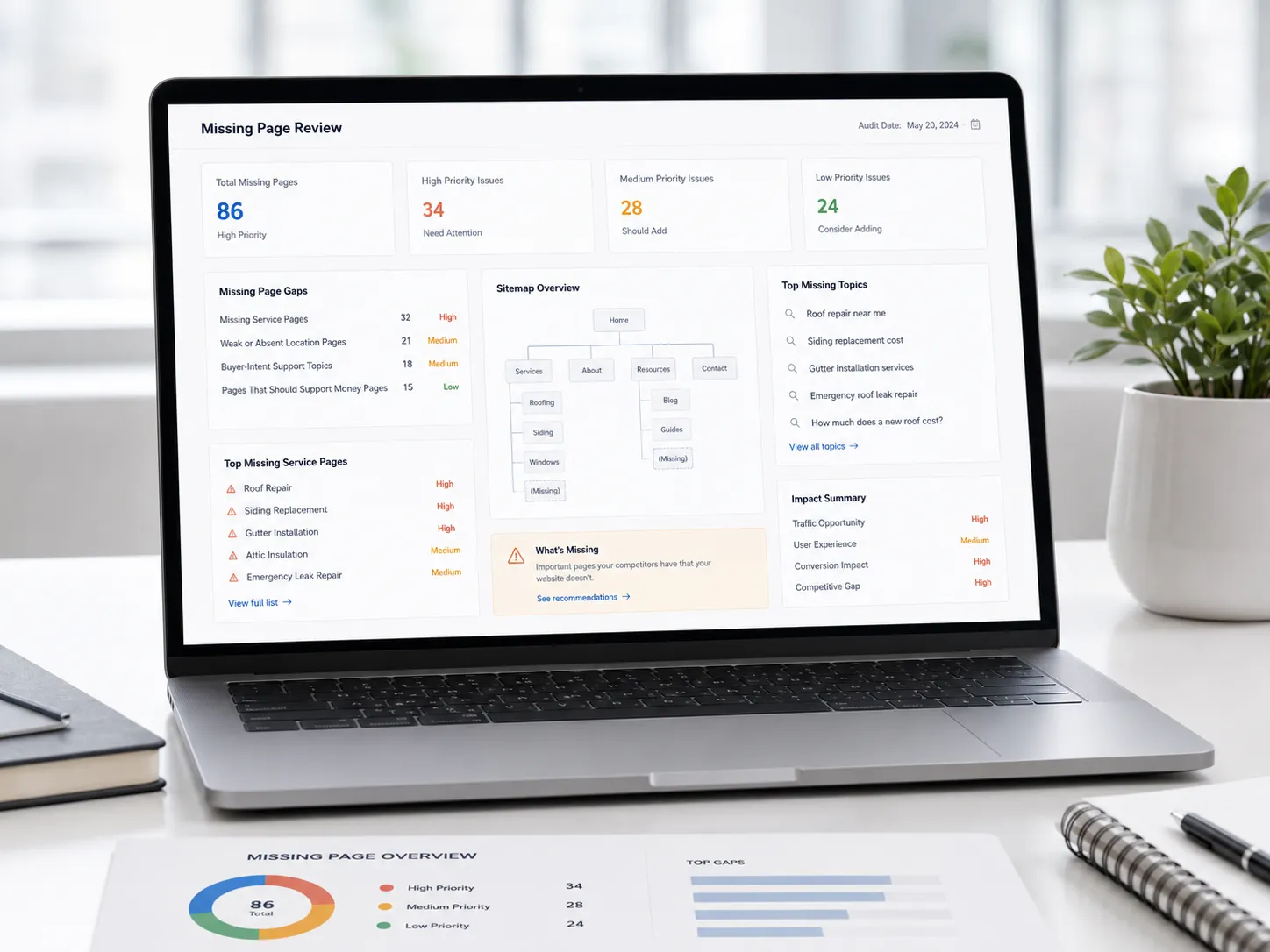
Business & Search Review
Clarify the priority services, target locations, customer problems, current assets, competitors, and conversion goals before planning more work.
- Priority service review
- Target city and service area review
- Current website and GBP assessment
- Main customer action and lead path
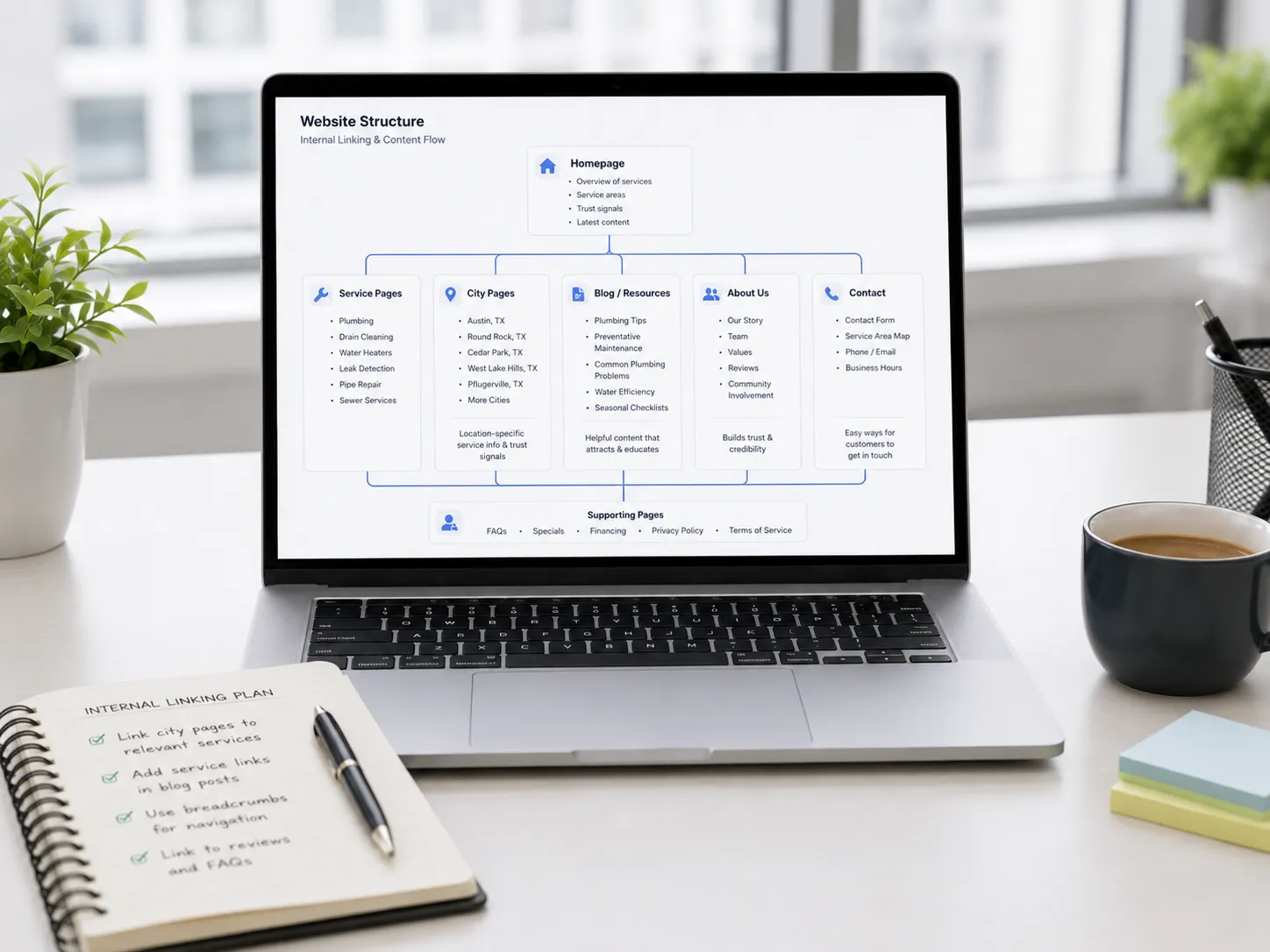
Service Page Architecture
Plan the core service pages, supporting pages, hierarchy, navigation, and conversion paths needed to explain the business clearly.
- Core money page plan
- Service-specific page opportunities
- Homepage and navigation structure
- CTA and inquiry path planning
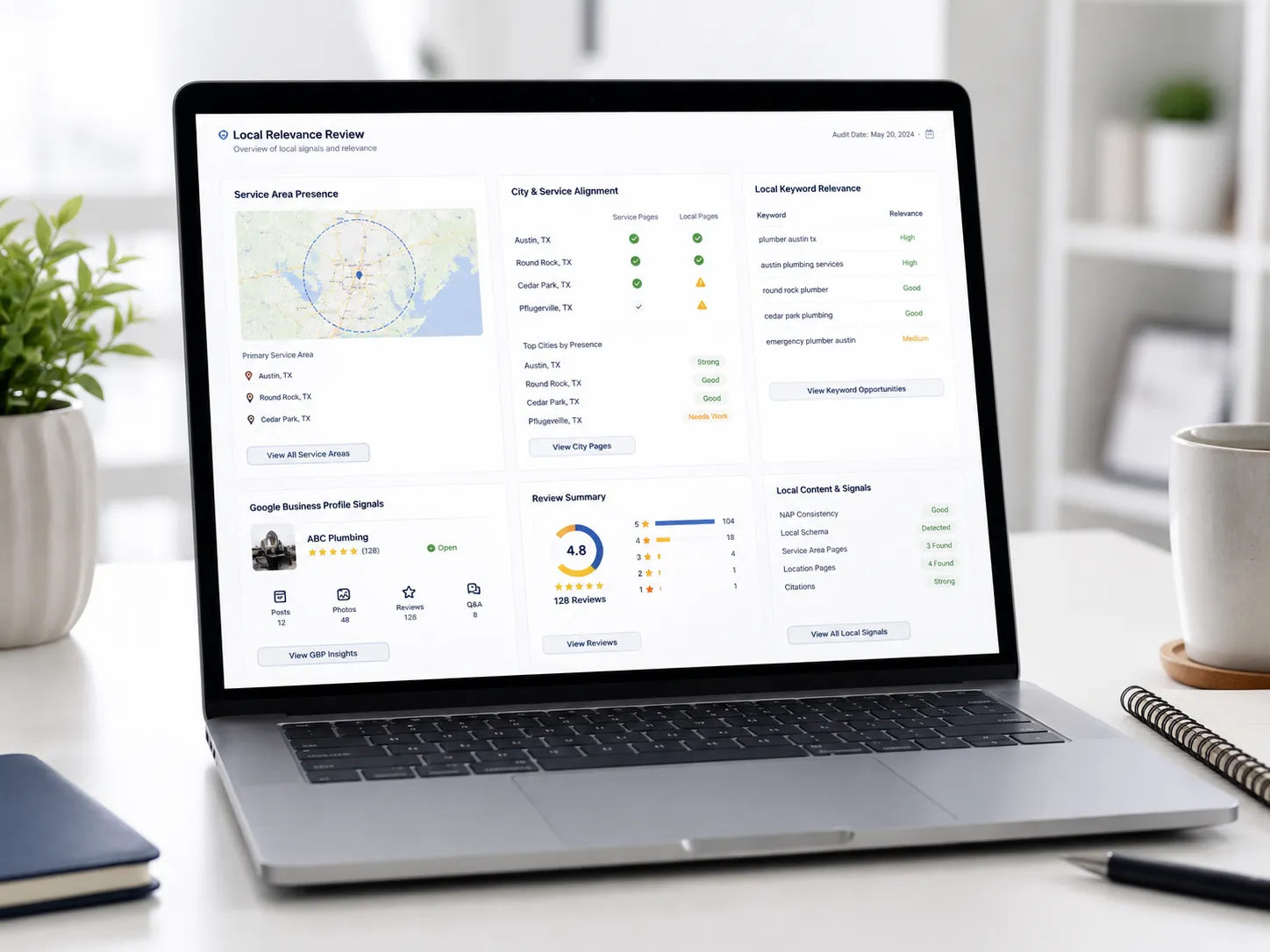
Location Coverage Plan
Decide which cities, neighborhoods, routes, or service areas deserve dedicated coverage and how they should connect to the main services.
- Priority location selection
- Service-plus-city mapping
- Location page differentiation
- Local proof and relevance ideas
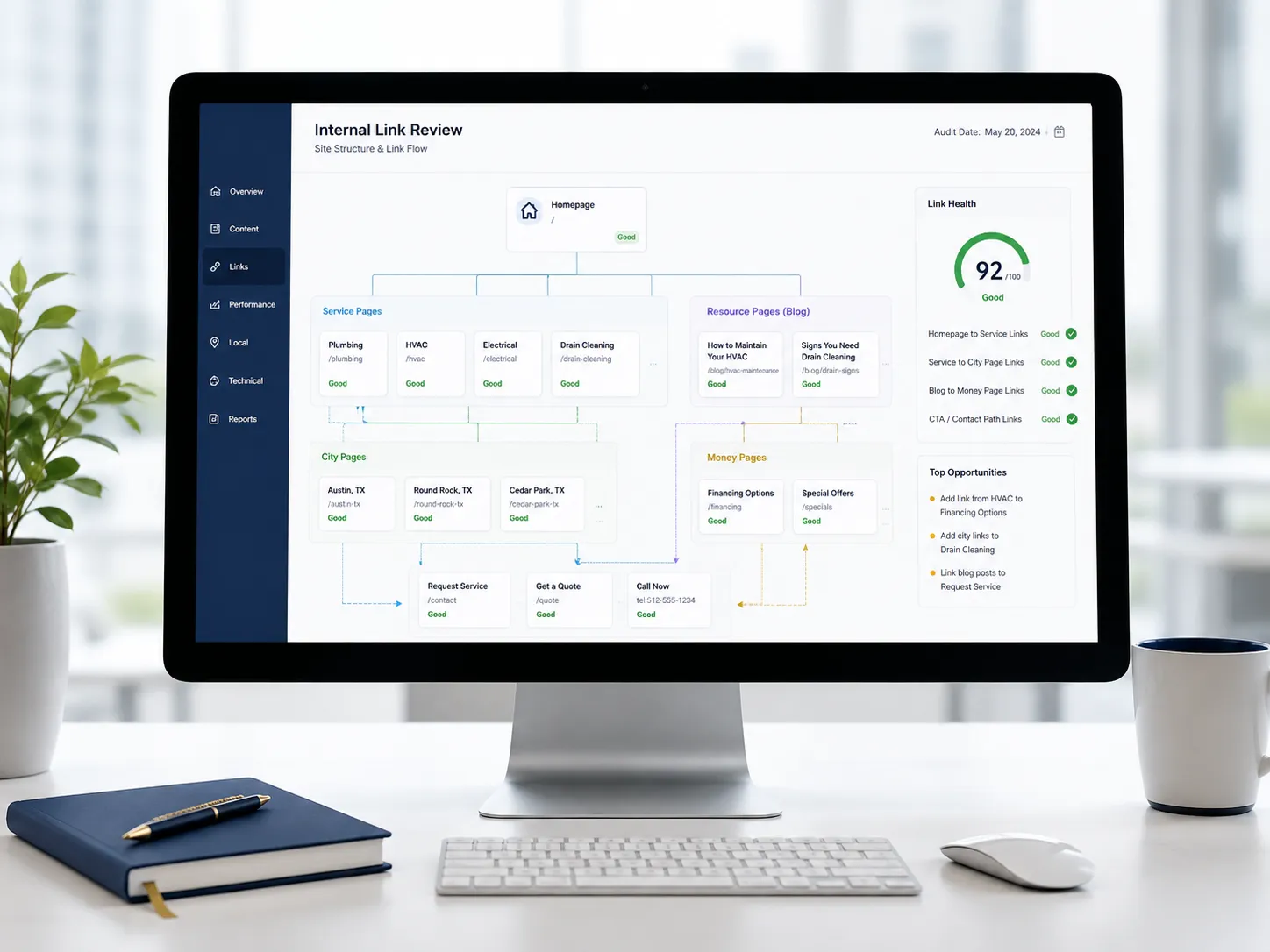
Content & Internal Links
Build supporting FAQs, buyer-intent topics, comparison content, and internal links that strengthen high-value service and location pages.
- Buyer-intent content topics
- FAQ and trust content
- Blog-to-service linking
- Service-to-location linking
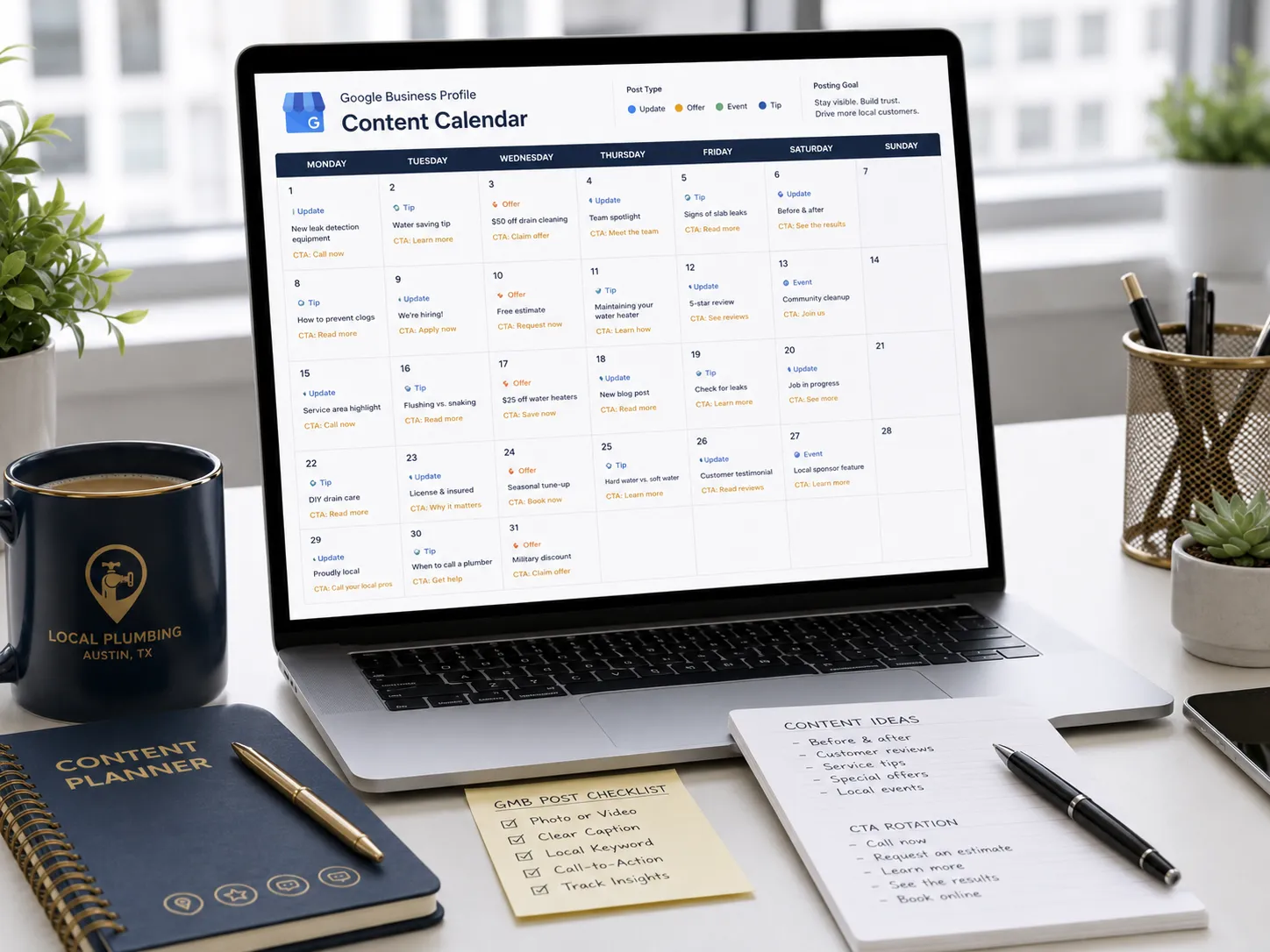
GBP & Listing Alignment
Align Google Business Profile topics, business details, services, categories, and citation information with the website’s core offers and service areas.
- GBP service-topic alignment
- NAP consistency priorities
- Profile content calendar direction
- Listing and citation opportunities
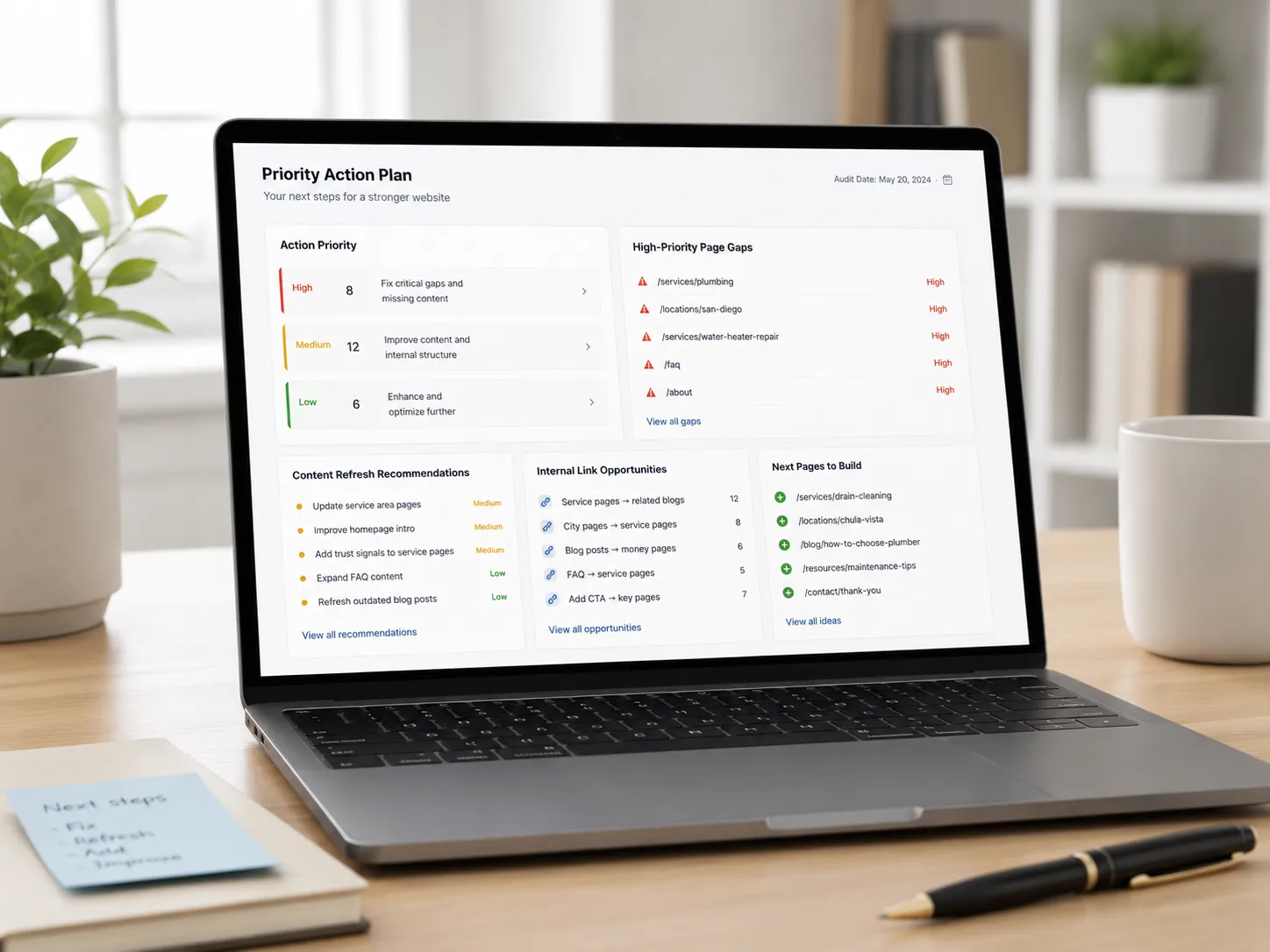
Priority & Measurement Plan
Organize the work into realistic phases and define the small wins, page improvements, profile updates, and lead actions worth tracking.
- Now, next, and later priorities
- Page and content milestones
- Visibility and conversion checks
- Ongoing improvement roadmap
Move from urgent fixes to stronger pages and ongoing local growth.
The exact order depends on the business, but a practical roadmap separates immediate accuracy and conversion fixes from page development, profile alignment, content support, authority work, and ongoing measurement.
Fix the foundation
Address the issues that affect clarity, accuracy, crawlability, and the customer path first.
- Review priority services and target locations
- Correct major website and GBP inconsistencies
- Improve homepage, contact, and core CTA paths
- Identify missing or weak money pages
Build high-value coverage
Create or strengthen the pages and profile content tied to the most important customer searches.
- Improve core service-page content
- Develop useful location coverage
- Add internal links and supporting FAQs
- Align GBP services and post topics
Support authority and measurement
Expand useful content, trust, citations, and performance checks without losing focus on lead quality.
- Publish buyer-intent support content
- Strengthen relevant listings and citations
- Review Search Console and conversion signals
- Set the next improvement cycle
Turn the roadmap into a defined local SEO project scope.
The action plan explains what should happen first, next, and later. A custom local SEO proposal turns the selected priorities into a documented project with deliverables, timing, responsibilities, exclusions, and a quotation.
The action plan prioritizes the work. The proposal defines the approved project.
A business can use the roadmap internally, share it with an existing team, or request a proposal for selected implementation work.
Start with the pages that can explain the offer and generate qualified inquiries.
A local SEO strategy should not begin with a long list of generic blog topics. It should begin with the pages customers need when they are comparing providers, checking service availability, researching a problem, or preparing to request a quote.
Give each channel and page a clear role in the customer journey.
Website pages capture and explain intent. Google Business Profile supports local discovery and activity. Citations reinforce consistent business details. Supporting content answers questions and directs visitors toward high-value pages.
A practical local SEO action plan your business can follow.
The final direction should make priorities easier to understand. Instead of a disconnected checklist, you receive an ordered plan showing which pages, profiles, content, links, and conversion improvements matter first.
Priority services, locations, customer questions, and visibility gaps worth addressing.
Pages to improve, pages to create, and how they should support one another.
Direction for website content, GBP activity, listings, citations, and internal links.
A realistic sequence of immediate fixes, next builds, and ongoing improvements.
How the local SEO action plan is created.
Strategy work starts with understanding the business and current search assets. It then turns the findings into a plan that can guide content, website, profile, and listing improvements.
Discover
Review the business, services, target areas, customer needs, current website, GBP, and local search goals.
Map
Connect priority services and locations to the pages, profile topics, listings, and support content needed.
Prioritize
Separate urgent fixes, high-value builds, supporting work, and lower-priority opportunities.
Execute
Improve pages, publish useful content, align profiles, strengthen links, and review measurable small wins.
Local SEO becomes harder when tasks are completed without a shared priority or structure.
The business may be publishing regularly and still have weak results because the core pages, profile information, local coverage, internal links, and conversion paths are not working together.
Build for customers first, then make the structure easy for search engines to understand.
A useful local SEO strategy follows clear search fundamentals: create helpful content, make important pages discoverable, use descriptive titles and headings, and maintain accurate business information. Review the Google Search Central SEO Starter Guide and the Google Business Profile Help Center for official platform guidance.
Questions about local SEO strategy for service businesses.
What is a local SEO strategy?
A local SEO strategy is an organized plan for improving the website, Google Business Profile, local business listings, service and location coverage, internal links, content, trust signals, and conversion paths that support local customer searches.
What should a local business improve first?
The first priority depends on the current gaps. Many businesses should begin with accurate business information, a clear homepage, strong core service pages, useful contact paths, and a review of missing location or buyer-intent pages.
Does a local SEO strategy include Google Business Profile?
Yes. The website and Google Business Profile should reinforce the same services, locations, business details, customer needs, and calls to action. Profile activity works best when it supports a clear website structure.
Do citations and business listings belong in the strategy?
Relevant listings and citations can support business information consistency. They should use accurate name, address, phone, website, category, service, and description details rather than being treated as isolated bulk submissions.
How is a local SEO strategy different from an SEO audit?
An audit identifies gaps and problems. A strategy turns those findings into an ordered plan for pages, profiles, listings, content, internal links, conversion improvements, and ongoing priorities. The two often work best together.
How is a local SEO action plan different from a local SEO proposal?
The action plan prioritizes what should be improved and in what order. A local SEO proposal defines the selected project scope, deliverables, timeline, responsibilities, exclusions, and custom quotation.
What is included in a local SEO action plan?
The scope can include website and GBP review findings, service and location priorities, page recommendations, internal links, content topics, citation needs, conversion improvements, and an ordered 30-, 60-, and 90-day roadmap.
How long does a local SEO action plan cover?
A practical plan often begins with 30-, 60-, and 90-day priorities. Ongoing work can then be reviewed in later cycles based on implementation, Search Console data, profile activity, and lead quality.
Can the action plan be used by my existing team or developer?
Yes. The roadmap can guide a business owner, internal marketing team, content writer, SEO provider, or web developer. Implementation support can also be scoped separately.
Does local SEO guarantee rankings or leads?
No. Search visibility and lead performance depend on competition, location, demand, website quality, reputation, implementation, and other factors. A strategy improves clarity and prioritization, but it cannot guarantee a specific ranking or number of leads.
Need a clearer roadmap before defining your local SEO project?
Send your website, Google Business Profile link, priority services, and target city or service area. Start with an ordered action plan, then request a custom proposal when you are ready to define the deliverables, timing, responsibilities, and project scope.